



















Main ebook topic
The Profitable Menu: How to Design a Coffee Shop Menu That Sells Smarter

Introduction
You’ve got great coffee, a loyal crowd, and steady foot traffic. But if your menu isn’t making money, none of that guarantees long-term success. The reality is, many coffee shops look busy but still struggle to stay profitable.
It’s usually not because the product is bad or the service is off. It’s the small things—pricing that’s a little too low, portions that give away too much, or drinks that sell well but don’t make money. These things don’t seem like a big deal at first, but over time, they quietly drag your business down.
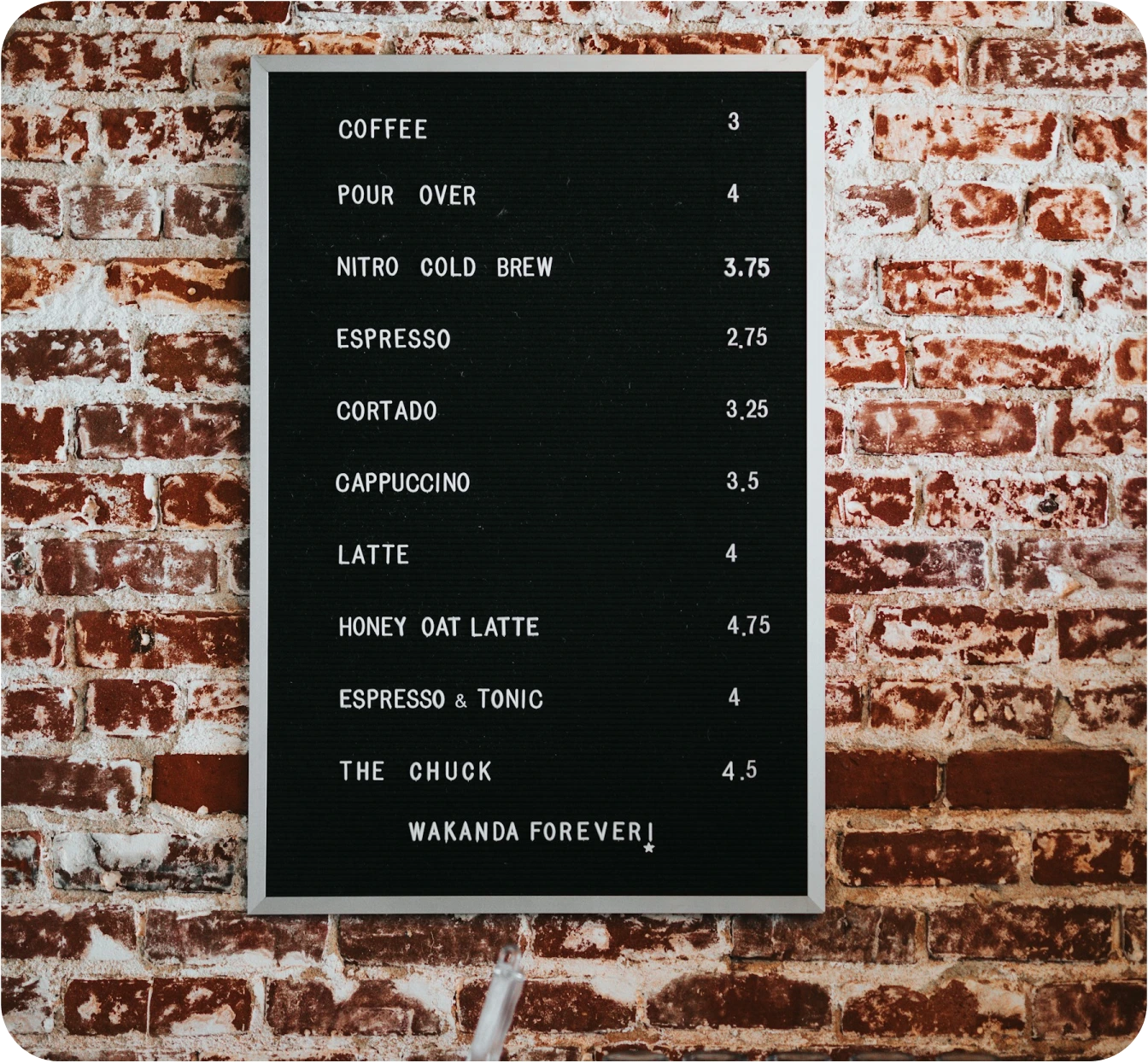
This book will help you rethink your menu as more than a list of items. It’s one of the most important tools in your business, and when it’s set up right, it can improve your margins, speed up service, and make your café more profitable without needing more customers.
You’ll learn how to price with intention, spot what’s working (and what’s not), use real data to make better decisions, and run a simpler, more profitable operation. The ideas in this book aren’t complex, and they don’t require big changes. Just practical steps that work in real cafés, with real teams.
And if you’re ready to take action, there’s a complete 30-Day Menu Optimization Plan waiting for you at the end of the book. It’s designed to help you apply everything you’ve learned, one week at a time, so you can start seeing results in your numbers and your day-to-day workflow,
Chapters
- Chapter 1Menu math made simple
- Chapter 2Identifying your workhorse items
- Chapter 3Eliminating dead weight from your menu
- Chapter 4Smart bundling to increase average spend
- Chapter 5The $5 anchor – How high-value items improve perception and profits
- Chapter 6How to test and rotate new items effortlessly
- Chapter 7How to raise prices without losing loyal customers
- Chapter 8Design your menu for speed and efficiency
- Chapter 9Seasonal drink profits – Pumpkin, peppermint, and beyond
- Chapter 1030-day menu optimization plan
- ConclusionFinal Thoughts