




















Loyalty Programs
Restaurant Loyalty vs. CRM: What's the Difference and Why Does It Matter?
Nov 4, 2026
TLDR
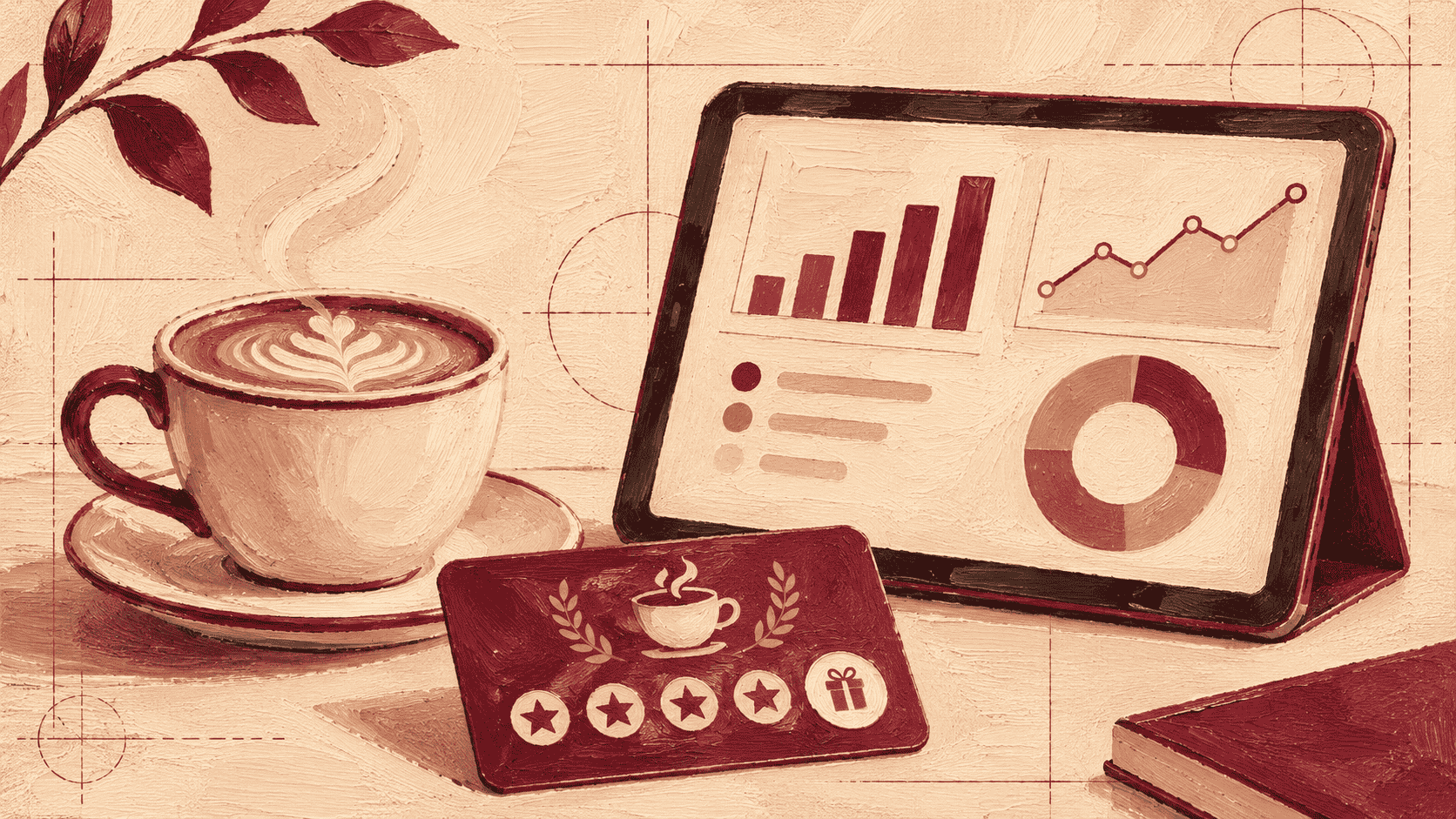
A customer earns points every time they buy coffee. Another gets a text from the same café after not visiting for a month. Both are ways to encourage repeat business, but they use different tools. One is a loyalty program, and the other is customer relationship management (CRM). Many owners confuse the two because both deal with customer retention, and some platforms offer them together. So, what exactly does each one do, and how can you tell which your restaurant needs? Here's how they differ.
What Is a Restaurant Loyalty Program?
A restaurant loyalty program is a system that rewards customers for their purchases, visits, or other activities. The idea is to encourage repeat business by giving people something to earn each time they choose your restaurant.
The simplest example is a coffee shop punch card where customers get a free drink after buying nine. Online loyalty programs follow the same principle but offer different ways to participate.
Common types of restaurant loyalty programs include:
- Points programs: Customers collect points on purchases and redeem them for free items, discounts, or other rewards.
- Tiered programs: Frequent customers move into higher membership levels with better benefits, such as exclusive offers or special perks.
- Visit-based rewards: Customers receive a reward after completing a certain number of visits.
- Challenges and streaks: Customers earn bonuses for completing activities, such as ordering three times in a week or visiting on consecutive weekends.
For an ice cream shop, this might mean offering a free scoop after five purchases or giving customers bonus points when they try a new flavor.
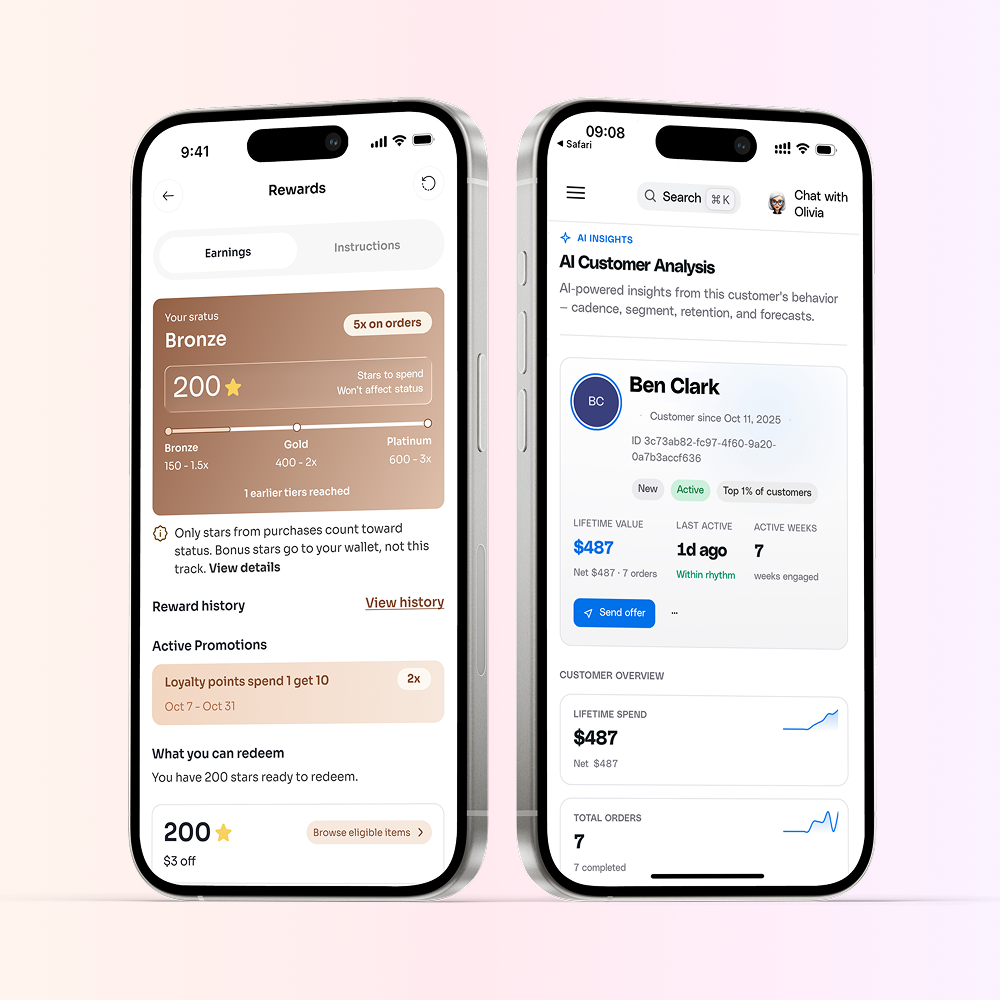
Loyalty programs can also help restaurants track member activity, including points earned, rewards redeemed, and purchase frequency. However, the information available depends on the platform and how customers identify themselves when ordering.
The value of a loyalty program comes from making rewards attractive enough to encourage additional visits without giving away too much of your profit.
What Is a Restaurant CRM?
CRM stands for Customer Relationship Management. In restaurants, CRM software helps owners collect and organize customer information, understand buying habits, and communicate with customers based on their activity.
For example, a pizza shop might serve hundreds of customers every week. Some order every Friday, others visit occasionally, and many place one order and never return. A CRM helps the owner recognize these patterns instead of treating everyone as the same customer.
A restaurant CRM typically helps with three important activities:
1. Building customer profiles
A CRM brings together available information about identified customers, such as contact details, order history, spending, and visit frequency. This information may come from online ordering, a connected point-of-sale system, or other customer interactions.
2. Grouping customers by behavior
You can easily identify different groups, including first-time buyers, frequent guests, high-spending customers, and people who haven't ordered recently. These groups are often called customer segments.
3. Sending targeted marketing messages
Instead of sending the same promotion to everyone, a restaurant can use email or SMS to reach specific customers. For instance, a sandwich shop could send a lunch offer to customers who usually order during weekdays or a reminder to guests who haven't returned in 30 days.
Some CRMs also support automated messages, so you can schedule communication around customer activity rather than creating every campaign manually.
Unlike a loyalty program, customers generally don't need to earn points or join a rewards scheme to appear in a CRM. They do need to be identifiable through your connected systems, and marketing messages must respect their communication preferences and applicable consent requirements.
Restaurant CRM vs. Loyalty Program: Key Differences
The main distinction is what each system is designed to manage. A CRM focuses on customer information and communication, while a loyalty program manages how customers earn and use rewards.
| Feature | Loyalty Program | Restaurant CRM |
| Primary purpose | Encourage repeat purchases through rewards | Manage customer relationships and marketing |
| Customer participation | Usually requires joining a rewards program | Can include identified customers outside a rewards program |
| Main functions | Points, rewards, tiers, challenges | Customer profiles, segments, campaigns |
| Customer communication | Reward updates and member offers | Targeted email, SMS, and automated messages |
| Example | Give 50 bonus points for a weekend purchase | Send a promotion to customers who haven't ordered in 30 days |
| Performance tracking | Reward redemptions, member activity | Campaign results, customer engagement, repeat purchase patterns |
One important detail is that these features can overlap. A loyalty platform may include customer data and messaging tools, while a CRM may offer basic rewards or connect with a separate loyalty system.
This is why it's worth looking beyond the product name when comparing restaurant software. Check what customer information you can access, what marketing actions you can take, and which rewards you can actually create.
How Do Restaurant Loyalty and CRM Work Together?
Loyalty and CRM can work independently, but connecting them allows restaurants to use customer information to make their rewards and marketing more relevant.
Take a neighborhood ice cream shop with 500 loyalty members. Some visit every weekend, some only come in during summer, and others have enough points for a free scoop but haven't redeemed them.
A connected CRM and loyalty system could help the shop respond differently to each group. Regular visitors might receive an invitation to try a new flavor, occasional customers could get a seasonal promotion, and members with unused rewards could receive a reminder about what they've earned.
The advantage is that the restaurant can use actual customer activity to decide who should receive a message and what to offer. It also becomes easier to see which campaigns lead to purchases and reward redemptions, provided those results are tracked by the system.
However, using both tools doesn't automatically guarantee better results. Restaurants still need to choose relevant offers, avoid sending too many messages, and measure how customers respond.
Does Your Restaurant Need Loyalty, CRM, or Both?
The right choice depends on how customers currently interact with your restaurant and what you want to improve.
Start with loyalty if your priority is only encouraging repeat visits. A café with a steady flow of walk-in customers could introduce a simple points program to reward familiar faces. It's particularly useful when customers purchase frequently and have opportunities to earn rewards within a reasonable time.
Consider CRM if you want to understand your customers and improve communication to keep them coming back again. A restaurant receiving plenty of online orders might want to know how many customers return after their first purchase. With the right customer data, it can create follow-up campaigns, promote new menu items to interested customers, and identify people who haven't ordered recently.
Use both if you want to connect customer marketing with rewards. For example, a growing group might use CRM to identify customers who have become less active and less loyal to offer an incentive that encourages another purchase.
Before investing in either solution, check how it connects with your existing POS and ordering channels. Also consider how easily your staff can manage it, what information you'll actually receive, and whether you'll have time to use its features consistently.
A smaller restaurant with a clear, manageable rewards program can often get more value than one paying for advanced tools it rarely uses.
See how Per Diem Loyalty and CRM can help you bring customers back and grow repeat orders. Book a demo
The Bottom Line
Loyalty and CRM serve different purposes, even though both can contribute to customer retention.
If your main concern is giving customers a reason to visit again, a loyalty program is a good place to start. If you need better visibility into customer behavior and a way to reach specific groups, CRM may be the more useful investment.
For restaurants looking to do both, Per Diem offers Loyalty and CRM as separate solutions that can work together with their Square setup.
The most useful starting point is to identify what's missing from your current customer experience. That will help you choose tools that solve a real problem rather than paying for features you don't need.