


















How to Measure Restaurant Marketing Automation Results
In Square’s 2026 research, 90% of local businesses using marketing tools maintained their regular customers, compared with 38% of businesses without them.
Keeping familiar customers coming back deserves a place on your scorecard. So do the orders you gained, the cost of earning them and the hours your team got back.
Those are the results that help you decide which campaigns to keep running.
What Result Should You Measure?
Choose the main result before launching.
A welcome journey might aim to increase the share of new guests who make a second purchase within 30 days. A weekday lunch campaign might aim to generate additional lunch orders. A catering email might bring in fewer purchases but much larger orders.
Write down the audience, the outcome and the measurement period. Keep those definitions consistent when comparing campaigns.
Delivery, opens and clicks help explain the path to purchase. They can reveal that a message failed to reach people or that the ordering link attracted little interest. The purchase result tells you whether the campaign achieved its business goal.
Did the Campaign Bring Customers Back?
Where possible, randomly divide eligible customers into a group that receives the campaign and a comparison group that does not.
Here is an illustrative return campaign measured over the same 14 days:
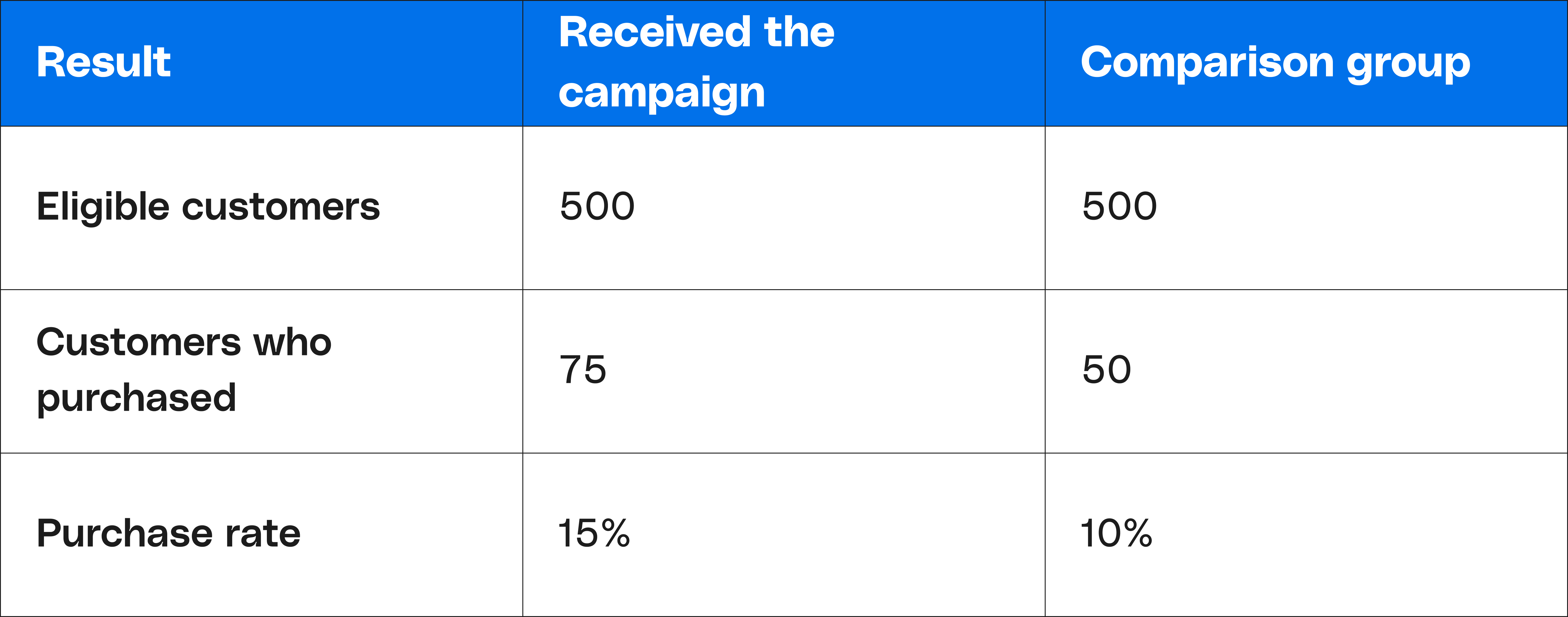
Seventy-five customers purchased after receiving the campaign. But 50 customers also returned without it.
The difference suggests approximately 25 additional purchasing customers, or a five percentage point improvement. Crediting all 75 purchases to the message would overstate its contribution.
Keep other treatment similar between the groups. If one receives several extra promotions, you are no longer examining the effect of this campaign alone. Small differences can also be chance, so look for a consistent pattern across further tests.
If a comparison group is unavailable, compare similar weekdays and periods, noting other changes. Describe the result as purchases following the campaign rather than treating every purchase as caused by it.
Did Those Additional Purchases Pay for the Campaign?
An offer costs money even when it reaches someone who would have ordered anyway.
Continue the example above. Suppose each returning customer places one order, contributing $8 after variable costs but before the campaign discount. Every returning customer in the campaign group receives $2 off.
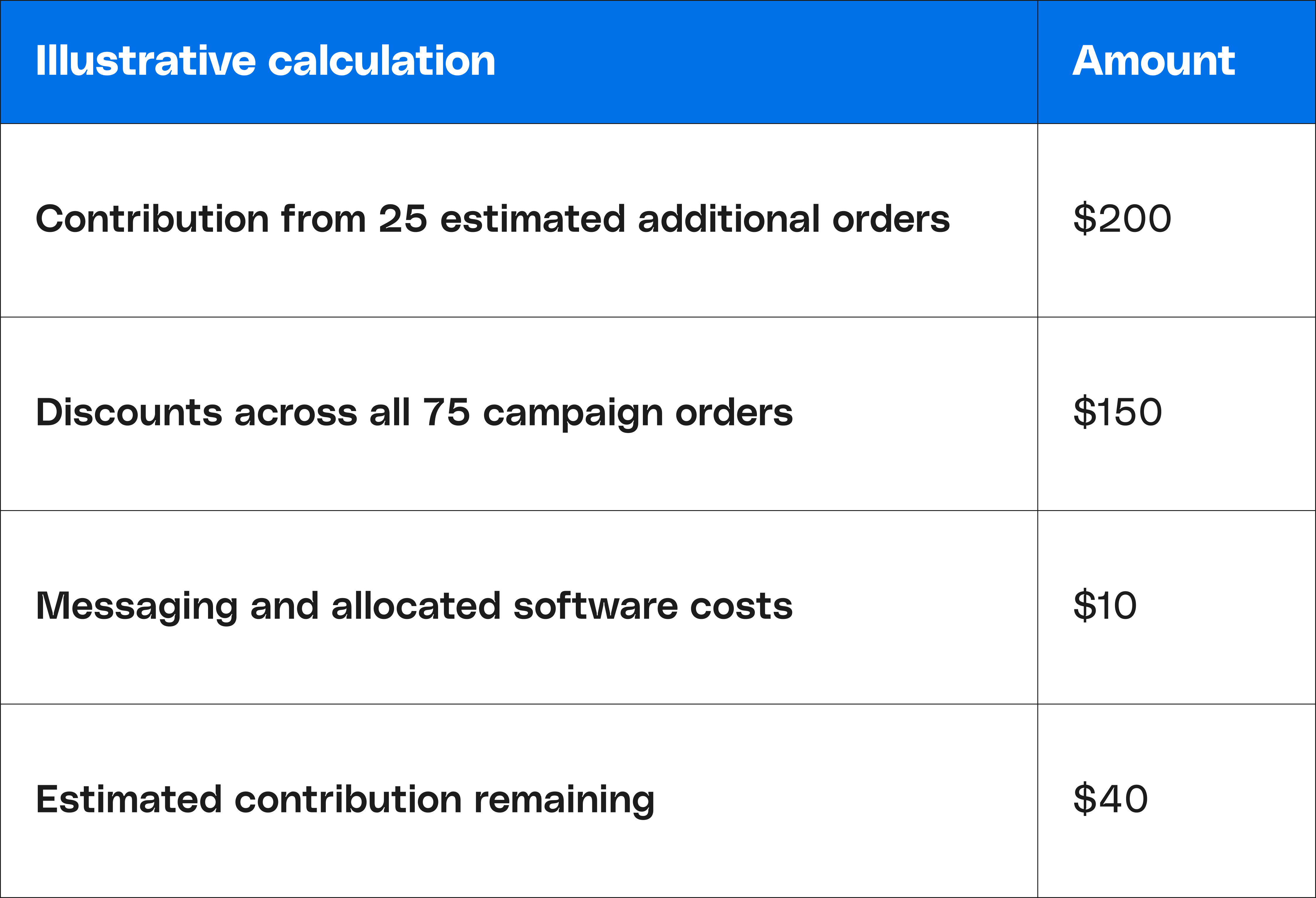
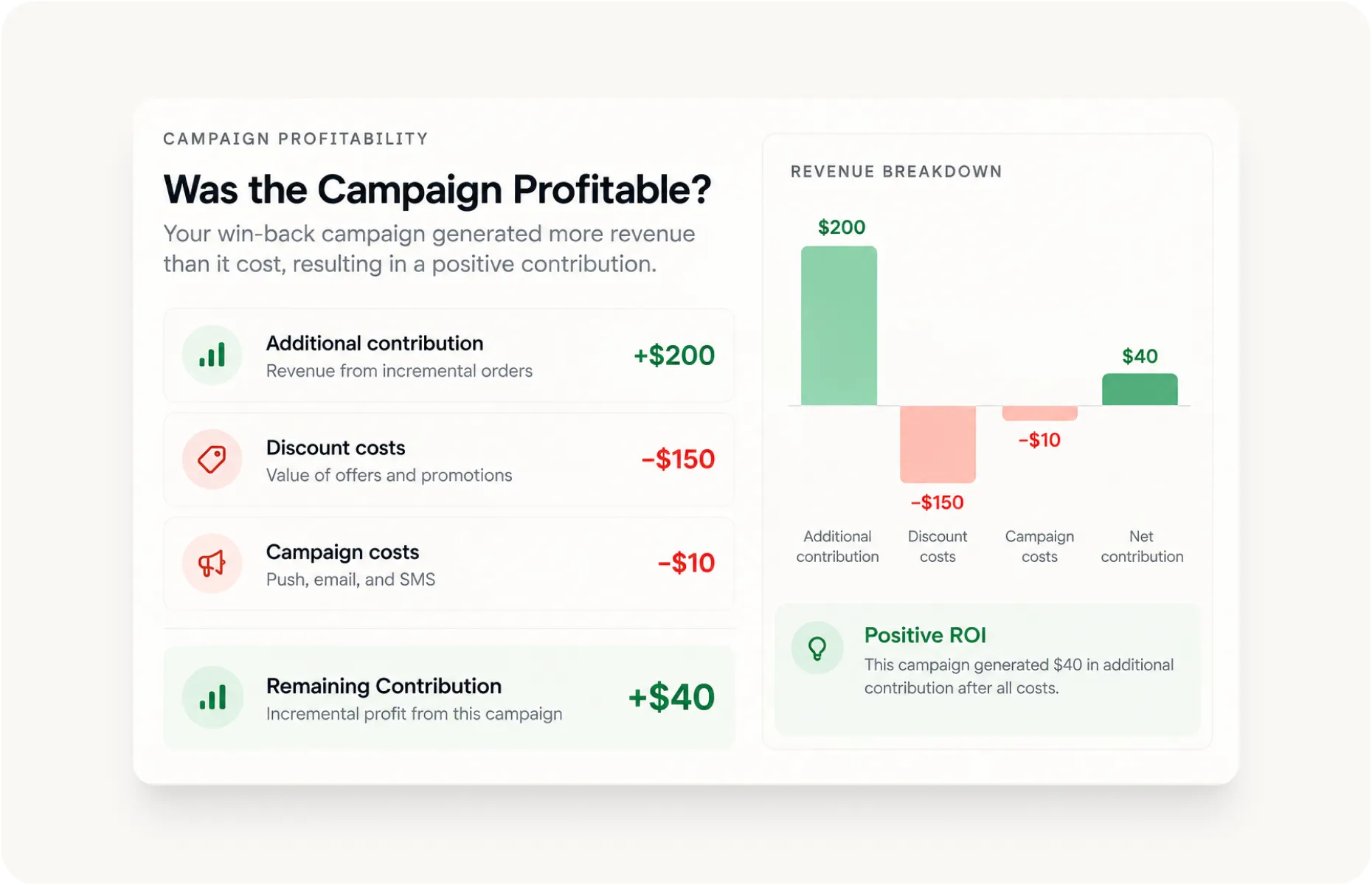
The campaign brought customers back, but its immediate financial contribution was modest. That gives you something specific to improve: the incentive cost, audience or offer structure.
Count any discount already included in your contribution figure only once. For points rewards or complimentary items, include their expected cost as well.
How Much Work Did the System Remove?
Measure time alongside sales.
Record how long your team spends preparing the audience, creating the campaign, checking the setup and reviewing results. For an ongoing journey, separate the initial setup from its weekly maintenance.
At Barrio Bagel & Slice, Oren Molovinsky described how app ordering “helps free up our staff.” With customers ordering ahead, the team could focus on preparing food during busy periods. That experience shows why time recovered belongs in a review of technology’s value, alongside sales.
Apply that same question to marketing: which recurring tasks no longer need someone to remember them?
You might find that preparing a weekly email takes less time, or that a welcome sequence now runs without someone checking new accounts each morning. Record the time saved and the work still required to maintain it.
What Should You Change Next?
Use the result to choose one adjustment.
Strong clicks with few purchases suggest reviewing the offer and ordering experience. More orders with little contribution suggest reviewing costs. Useful results with heavy manual upkeep suggest simplifying the process.
Keep a short record of what ran, what happened and what you changed. Over time, that record becomes your restaurant’s own evidence for where AI and automation earn their place.