





















Loyalty Programs
How 3 Bean Coffee Co. Increased AOV 17% by Rethinking Its Loyalty Program
Aug 21, 2026
TLDR
Sisseton, South Dakota, is home to around 2,500 people. It is the kind of place where a coffee shop can become part of someone's week, not simply somewhere they happen to stop for coffee. At 3 Bean Coffee Co., the loyalty data shows that. Some customers return again and again, with the most frequent visitors visiting over five times a week on average. That raises a useful question for any coffee shop with a loyal local following: if someone already chooses you five times a week, should your loyalty program treat them the same as someone who visits once a month?
Your Best Coffee Shop Customers Need a Different Kind of Loyalty
Most coffee shops already know their regulars.
They are the customers whose orders the team starts preparing before they reach the counter. The ones who stop in on the way to work, bring a friend on Saturday, or add a pastry because they have already decided where they are getting coffee.
From a business perspective, these customers matter the most. Square's 2026 Local Economy Report found that regular customers generate six times the annual revenue of one-time customers at local businesses. In food and beverage, 59% of regulars tend to order the same thing each time they visit.
That makes the usual loyalty question less useful.
Instead of only asking, “How do we get this customer to come back?”, coffee shops can ask what they want that customer relationship to become.
Take someone visiting five times a week. Giving them the same reward after the same number of purchases certainly gives them something back, but it misses a lot of what you already know about them. They have shown you how often they visit. Their order history tells you what they like. Their spending tells you how valuable they are to the business.
A better loyalty experience can use that behavior.
Your occasional customer might appreciate reaching their first free drink quickly. A regular could have a larger reward worth saving for. Someone visiting several days in a row could complete a streak. Your highest spending customers could move into a new tier with better perks. A birthday reward gives you another reason to recognize someone without asking them to buy something first.
The point is not to make loyalty complicated. Customers should still be able to understand what they earn and what they can get.
The opportunity is to stop assuming that every loyal customer needs the same reason to participate.
A Loyalty Program Can Do More Than Track Purchases
This is where the design of the program starts to matter.
The familiar coffee shop model has worked for years because it is incredibly easy to understand. Make a certain number of purchases and get something free. There is no reason to throw that idea away.
But online loyalty gives a coffee shop room to build around it.
With Per Diem Loyalty, your business can create several rewards at different point levels. Customers can earn toward the reward that makes sense for them rather than reaching the same prize every time.
The shop can then add other ways to participate.
Points multipliers can make certain purchases or periods more rewarding. Visit streaks and challenges can give customers a specific goal to complete. Birthday rewards create a benefit tied to the customer rather than a transaction. Tiers can unlock different perks as customers progress. Games such as Spin the Wheel, Pick a Box, and Scratch Card can award extra points and add an element of chance after an order.
Each feature has a different job.
A multiplier can help a customer reach their next reward sooner. A challenge can encourage them to try something they would normally skip. A tier can recognize someone whose visits or spending have reached another level. A game can turn the few seconds after checkout into another interaction with the brand.
This gives coffee shops far more room to think about the behavior behind a reward.
That is important because simply signing customers up does not guarantee they will stay for long. Deloitte's 2026 consumer loyalty research found that people are enrolled in eight loyalty programs on average but actively participate in only five. It also found that 56% of consumers say loyalty programs lead them to spend more with their preferred brands.
The challenge is therefore not adding another place for customers to collect points. It is giving them reasons to keep participating after the novelty of joining wears off.
And that is where 3 Bean's approach becomes particularly interesting.
How 3 Bean Coffee Built Its Loyalty Program
3 Bean took a simple idea and made it fit the way people already order from the shop.
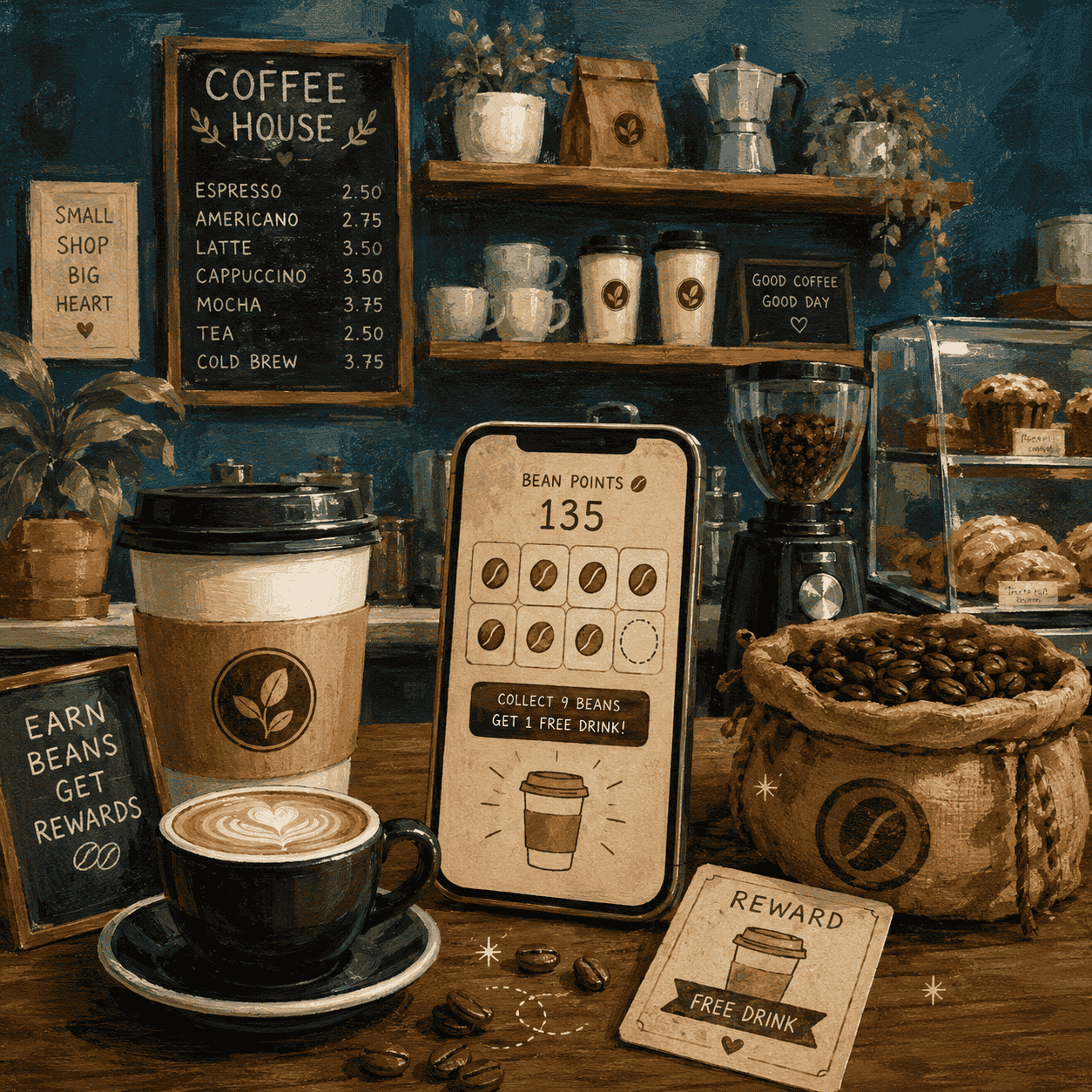
Customers earn one Bean for every dollar they spend. But there is no single reward waiting at the end. They can use 30 Beans for a muffin or cake pop, 100 for a large drink, or save 175 Beans for $10 off an order.
That choice is important.
Someone who buys coffee occasionally can reach a smaller reward without a long wait. Someone ordering throughout the week can keep their Beans and work toward something with a higher value. Customers decide what is worth saving for instead of being pushed toward one fixed reward.
3 Bean also uses double Beans promotions. During these periods, an order moves a customer toward their chosen reward twice as quickly. For someone already thinking about lunch, an afternoon drink, or an extra item, that added progress can make the purchase feel worthwhile.
Then there are the games. Customers can get a chance to play after checkout and win an extra reward. It is a small addition to the ordering experience, but it gives the program an element that a traditional punch card cannot offer: customers do not always know exactly what they will get.
None of these mechanics asks customers to learn a complicated system. Spend a dollar, earn a Bean, choose what to redeem. Everything else gives them additional opportunities along the way.
See why gamified rewards beat traditional rewards in this article.
The Number That Changed After Launch
The clearest result so far is not the number of Beans issued or rewards claimed.
It is what customers are spending when they order.
Since introducing Per Diem Loyalty, 3 Bean Coffee Co.'s average order value has increased by 17%.
For a coffee shop, that is significant because there are only so many transactions you can fit into a morning rush. Growing sales does not always have to mean finding another person to stand in line. Increasing the value of purchases already happening can matter too.
Consider a customer deciding between their usual drink and adding something from the bakery case. If that extra purchase also moves them closer to a reward they actually want, there is now another reason to add it. The same applies to sizing up an order or saving toward the $10 reward instead of redeeming at the first opportunity.
We cannot say that every extra dollar came from one loyalty feature. Customer spending is influenced by many things. What the data does show is that after 3 Bean introduced its new loyalty experience, the average value of an order was 17% higher.
That is a far more useful measure than counting how many people joined.
What Your Coffee Shop Can Learn From 3 Bean
The takeaway from 3 Bean is not to copy its reward menu. A muffin at 30 points might work perfectly for one shop and make little sense for another.
What is worth copying is the thinking behind it.
Give customers something reachable. If the first useful reward feels too far away, there is little excitement in earning the first few points. An entry-level option gives newer members an achievable goal.
Leave something worth saving for. A higher value choice gives frequent buyers a reason not to redeem immediately. For 3 Bean, customers can choose between an earlier food or drink reward and continuing toward $10 off.
Match rewards to what you actually sell. A bakery-focused café might use pastries. Another shop could offer an upgrade, a seasonal favorite, or money off a larger order. Pick rewards that fit how people already buy from you.
Use promotions with a purpose. Double points do not need to run constantly. They can support a particular day, product, or campaign when you want to encourage a specific purchase.
Watch what changes after launch. Look beyond sign-ups. Average order value, visit frequency, redemptions, and reward usage can tell you what customers respond to and where the program needs adjusting.
Build Loyalty Around the Customers You Already Have
3 Bean is a local coffee shop in a small South Dakota town. That is exactly what makes its story useful.
Building a stronger loyalty program did not require changing what customers already loved about the shop. It meant paying closer attention to how different customers behave and creating rewards that fit those habits.
For another coffee shop, the right setup will probably look different. Your regulars may come every morning. They may spend most on weekends, always add breakfast, or rarely redeem the points they have earned. Start there.
The best loyalty program for your coffee shop is unlikely to come from copying the shop down the street. It comes from understanding the people who keep choosing yours, then giving them something worth coming back for.
Want to build a loyalty program around your best customers? See what Per Diem Loyalty could look like for your coffee shop. Book a demo to get started.