















What Americans Are Drinking in 2026: The Most Ordered Non-Alcoholic Beverages
For years, beverage trend reports have largely centered around alcohol. New cocktail formats, premium spirits, and bar culture have shaped most conversations about what people are drinking.
But that focus is starting to shift.
Across the U.S., non-alcoholic beverages are no longer just alternatives. They are becoming the main space for experimentation and growth. Coffee shops, tea brands, and specialty beverage concepts are pushing flavor in ways that feel more creative, more global, and more personal than what traditional drink menus have offered.
This shift is not happening in isolation. A broader change in consumer behavior is driving it. Health considerations, lower sugar preferences, and interest in functional benefits are all playing a role, alongside the continued rise of the sober-curious movement. According to Mintel, nearly 30% of U.S. consumers are actively reducing their alcohol intake, creating space for a new kind of beverage culture to take shape.
Customers are not simply looking for something to drink. They are looking for something that feels layered, distinctive, and worth coming back for.
Instead of predicting what might trend next, a clearer picture comes from looking at what people are already ordering consistently.
Looking at aggregated online ordering patterns across cafés using Per Diem during the first quarter of 2026, a set of drinks continues to stay at the top across regions. These are not one-time spikes or seasonal experiments. They are items that customers keep returning to, offering a more grounded view of how taste is evolving.
The drinks defining 2026 right now
1. Tropical Passionfruit Tea
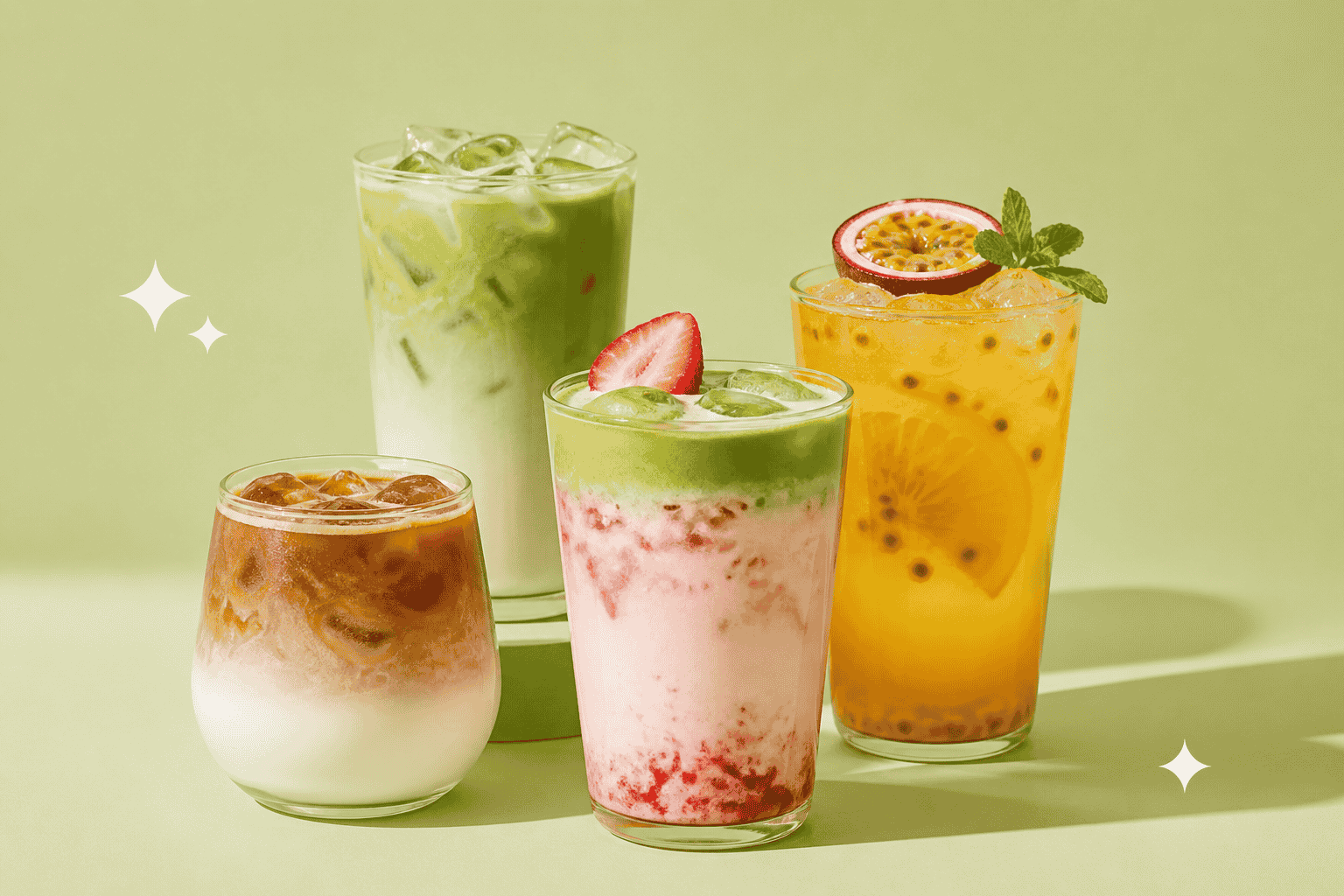
Bright, vibrant, and consistently popular, this category reflects a growing demand for drinks that feel refreshing but still complex. Blends combining passionfruit with citrus or mango, often layered over black tea or hibiscus, are performing strongly across multiple regions, pointing toward a clear preference for fruit-forward drinks that balance sweetness with acidity rather than leaning too heavily in one direction.
2. Pistachio Jasmine Dream
Floral teas are evolving. Jasmine milk tea paired with pistachio brings together delicate aromatics with a rich, nutty finish. This combination has gained traction partly due to broader interest in pistachio flavors across desserts and beverages, and shows how more unexpected pairings, especially floral and nut-based profiles, are becoming not just accepted but increasingly expected.
3. Salty Dog Cold Brew
Sweet-and-salty combinations are no longer niche. Cold brew with salted caramel or lightly salted vanilla syrups is showing consistent repeat orders. It stands out because it introduces contrast without overwhelming the base flavor, reflecting a growing openness toward layered profiles where balance matters more than straightforward sweetness.
4. Brown Sugar Pearl Latte
Still holding strong, this drink continues to perform across regions. The appeal lies in texture as much as flavor, with brown sugar adding depth while pearls create a more interactive drinking experience. It highlights how texture is becoming just as important as taste when it comes to designing drinks that customers return to.
5. Baklava Latte
Inspired by Middle Eastern dessert flavors, this drink blends honey, cinnamon, pistachio, and sometimes walnut into a rich latte base. It goes beyond novelty, reflecting a broader acceptance of culturally inspired flavor profiles that are increasingly finding a place in everyday café menus rather than remaining niche offerings.
6. Strawberry Matcha Latte
Matcha remains strong, but it’s evolving. Strawberry, along with other berry pairings, helps soften matcha’s earthiness and makes it more accessible to a wider audience. This shift shows that customers are not moving away from matcha, but are instead looking for new ways to experience it through more familiar and approachable flavor combinations.
7. Iced Matcha Latte
Even without additions, iced matcha continues to rank among top orders, especially in markets like California and New York. California alone accounts for nearly 50% of all matcha latte orders in this dataset, reinforcing just how strong the demand is in that market. Its consistency speaks to its position as a staple rather than a passing trend, showing how certain drinks move beyond experimentation and become part of the core menu.
8. Banana Espresso Drinks
Banana may seem unexpected, but it’s quietly gaining traction in espresso-based drinks. When paired with milk and subtle sweetness, it adds body without overpowering the coffee. That shift is also showing up more broadly, with menu mentions of banana increasing by nearly 10% over the past few years. Its rise points to a growing openness toward unconventional flavors, especially when they are introduced through familiar formats.
What cafés are getting right
Looking across these drinks, the cafés seeing steady demand are the ones putting more thought into how their drinks are built. House-made syrups, signature blends, and flavor combinations that feel specific to the brand are showing up more often in menus that perform well.
Sales of functional drinks like kombucha, kefir, and matcha are up more than 50% year over year, pointing to a broader shift toward wellness-focused beverages.
There is also a shift in how drinks are balanced. Sweetness is still there, but it is rarely standing on its own. It is paired with acidity, texture, or a slight savory note, which makes the drink feel more rounded and easier to come back to.
What stands out most is consistency. The drinks that keep showing up at the top are not just interesting, they are reliable. Customers know what they are getting, and they come back for it.
A different kind of trend cycle
What this points to is a change in how trends are actually playing out in 2026. Instead of short bursts of popularity, momentum is building around drinks that people order again and again.
Customers are still open to trying something new, especially when the flavors feel familiar enough to trust. Over time, those choices settle into regular habits, which is what keeps certain drinks at the top.
Non-alcoholic beverages are playing a big role in this shift. A lot of the experimentation is happening here, and it is shaping how menus are evolving overall.
For cafés, the opportunity is fairly straightforward. Pay attention to what customers are already choosing, and build on that in a way that feels true to the brand.