





















Partnerships
Parsons Bakery Moves 48 Shops to Square: The Shift Toward Connected Tech
Sep 9, 2026
TLDR
Parsons Bakery is entering its second century with a new technology setup across all 48 shops. The long-standing British brand has chosen Square as it continues to grow across South West England and Wales. It is a notable move for Parsons, but also an interesting signal for the wider food industry. As established brands expand, the technology behind each location is becoming an increasingly important part of creating a smooth experience for both teams and customers.
Why Parsons Bakery Chose Square for Its 48 Locations
The most useful detail in Square’s announcement is what Parsons was trying to change.
Before moving to Square, the bakery was using separate systems for point of sale, payments, loyalty, and online ordering. Those tools did not communicate with each other. Parsons wanted one platform that could support the size and structure of its business.
Its new setup brings several parts of the business into Square:
- Square for Restaurants Plus supports day-to-day shop operations.
- Square handles point-of-sale and payment processing.
- Square Loyalty and Square Marketing support customer relationships.
- Square Online provides click-and-collect ordering at selected locations.
That matters at a business with 48 shops. A menu update, customer reward, payment, or online order is no longer something happening at a single bakery counter. Technology has to support teams and customers across a much larger operation.
Square is built for this type of setup. Its restaurant tools support multi-location food businesses, including bakeries, with central menu management, customer data, online ordering, payments, reporting, and loyalty. Square Online can also handle orders from several locations through one website while keeping online and in-store information in sync.
Multi-Location Bakery Is Moving Toward Connected Platforms
Parsons is a useful example of a wider change in food service technology.
As larger groups grow, their needs expand quickly. The counter still matters, but it becomes one part of a much larger customer journey. People may discover a bakery online, check a menu on their phone, order ahead, collect from a nearby shop, earn loyalty rewards, and return later after receiving an offer.
The systems behind those actions work best when information can move between them.
That explains why the Parsons move is significant. Instead of adding another standalone tool for each new requirement, the bakery has chosen a platform designed to handle several parts of the business together.
Square itself is moving strongly in this direction. Its restaurant platform now serves more than 450,000 food and beverage businesses, while its wider restaurant offering supports integrations with over 140 partners.
For growing bakery groups, the priority is choosing technology that works across locations. New shops should be easy to add without rebuilding menus, loyalty programs, ordering, or reporting from scratch.
Parsons’ move to Square shows how this approach can support expansion.
One Brand Still Needs to Feel Local Across 48 Shops
Running 48 shops on the same technology does not mean every location has exactly the same day.
Parsons operates across 10 counties in South West England and Wales. A customer stopping for breakfast in Bristol may have different habits from someone collecting lunch from another Parsons location. Opening hours can vary. Product availability can change. Local demand can look different from one shop to another.
That creates an important challenge for any multi-location bakery: keeping the brand familiar while making each location useful to the people who actually visit it.
Consistency Across Locations, Flexibility for Customers
Online ordering can help with that balance.
A customer should be able to choose the shop that suits them, see what is available there, check the right opening hours, place an order for that location, and still feel like they are dealing with the same Parsons brand.
The same principle can apply to customer communication. A seasonal product might make sense as a campaign across every shop, while another message may only be useful to customers near a particular location.
Why Local Context Still Matters
This is where having a strong technology base starts to matter outside the back office. Location information, ordering, customer activity, and marketing can support a consistent brand without treating all 48 shops as if they serve exactly the same audience.
For franchisees, that balance will become increasingly important as digital ordering becomes a normal part of the relationship between the shop and its regular customers.
*Learn how to set up online ordering for your store in minutes. *
The Customer Experience Can Follow the Same Connected Approach
Parsons’ move brings its core systems closer together behind the counter. The same thinking can also shape what customers see on their phones.
For a bakery, mobile ordering is often tied to everyday habits. Someone wants to order lunch before leaving the office, pick up coffee without waiting, check their rewards, or quickly reorder something they buy every week. Each interaction should feel like it belongs to the bakery they already know.
A Branded App Can Become the Bakery’s Online Counter
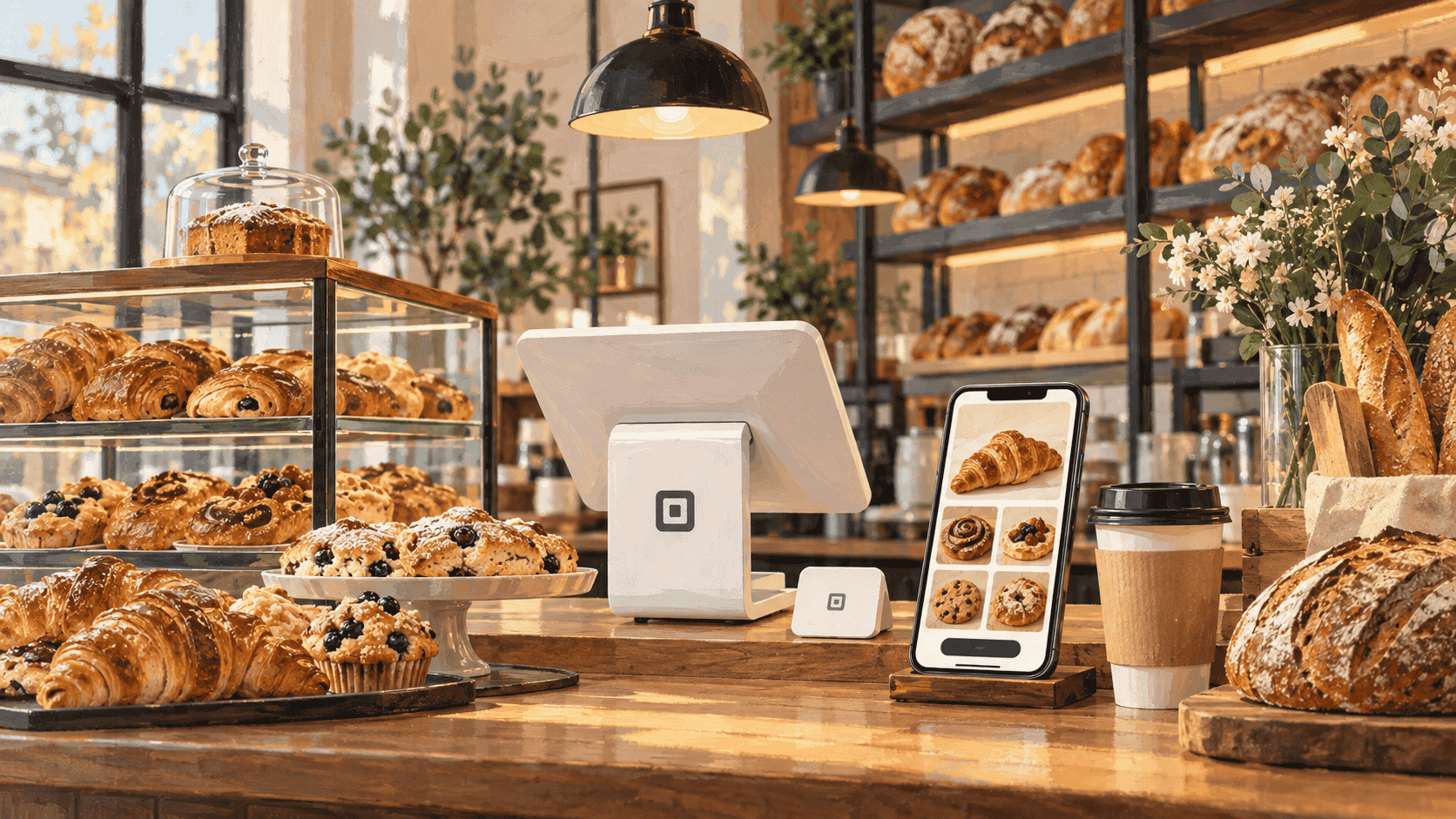
A mobile app gives a bakery its own space for ordering, rewards, offers, and updates. Instead of asking customers to use separate experiences for each task, the brand can bring them into one place.
This is where Square’s partner ecosystem gives food businesses room to build around their existing setup.
Per Diem is built for restaurants and bakeries using Square. A brand can launch its own iOS and Android app while continuing to use Square for its core operations. Menus and modifiers sync from Square, and orders placed through the app go back into Square POS. Square Loyalty can also remain at the center of the rewards experience.
For Parsons, that could mean a branded app where customers browse the menu, order ahead, pay, and see their rewards.
The important part is what happens behind that experience. Staff do not need a completely separate order flow simply because a customer chose to order from the bakery’s app.
Online Ordering Should Fit How Bakery Customers Buy
Bakery visits can be frequent and predictable. That makes convenience especially useful.
A regular customer may want the same coffee before work. Someone buying lunch may want to place the order before arriving. Another customer may be waiting for a seasonal product to return.
Digital tools can make those small moments easier through saved preferences, quick reordering, pickup, order updates, and timely messages.
Per Diem already supports this type of Square-based setup for multi-location food brands. Pita Street Food uses Per Diem across its 40+ locations, while Hidden Grounds uses the app across eight locations. Customers can order ahead and earn rewards while the ordering flow stays tied to Square.
For larger bakery groups, the value of an app is therefore not simply having another place to sell. It is giving regular customers a faster route back to a brand they already visit.
Loyalty Can Become Part of the Bakery Routine
Parsons is also rolling out Square Loyalty, which makes customer retention an important part of its new technology setup.
For bakeries, loyalty has an advantage that many other businesses do not: customers often have natural reasons to return. Coffee, breakfast, bread, lunch, cakes, and small treats can all become repeat purchases.
A loyalty program can recognize that behavior without making the experience complicated.
Square Loyalty can sit at the center of that relationship, while integrated experiences can give customers additional ways to interact with their rewards.
For example, Per Diem supports Square Loyalty inside branded apps and web ordering. Customers can see their points and use rewards while ordering digitally. Bakery brands can also add experiences such as birthday rewards, referrals, visit streaks, monthly challenges, and points promotions.
The opportunity here is not to send customers a constant stream of discounts. It is to make loyalty useful at the moments when people are already likely to buy.
The bakery could announce a new seasonal pastry to regular visitors, reward a customer after a run of visits, or make it easy for someone to see how close they are to their next reward before placing an order.
That turns loyalty into part of the normal customer routine instead of a separate program people forget they joined.
See what Square merchants have to say about Per Diem and explore the integration on the Square App Marketplace.
Square’s Partner Ecosystem Gives Growing Food Brands Room to Build
One of the useful parts of choosing a platform like Square is that a business does not have to predict every digital feature it may need several years from now.
Square supports a broad partner ecosystem, allowing food businesses to connect specialized products as their needs change. Square has already highlighted this model with larger hospitality brands. Bluestone Lane, for example, uses Square across 65 locations while connecting other platforms for digital ordering, loyalty, delivery, restaurant management, and analytics through Square’s open platform.
Per Diem fits into that model for brands that want their own online ordering and customer experience.
It works with Square a merchant already uses, rather than asking the business to replace its POS. A bakery can add a branded app, web ordering, pickup, curbside, delivery, customer marketing, and loyalty features while menus, orders, payments, and rewards stay tied to Square.
For a multi-location business, that approach matters because new customer features can be added without creating an entirely separate operational world for staff.
Parsons’ move is a timely example of why this model is gaining attention. A strong core platform can handle the daily operation, while an open ecosystem gives the business options as customer habits and digital expectations change.
Final Thoughts
Parsons Bakery’s 100th year, 48 shops, and Square-powered setup show how established food brands can modernize without losing what customers already love.
Square brings payments, operations, loyalty, marketing, and online ordering into one connected system. Partners like Per Diem can then add a branded app, online ordering, and customer engagement tools around that core.
For bakeries ready to build a more connected customer experience,* book a demo** to see how Per Diem can work with Square.*