





















Square
Square Data Reveals How Restaurants Can Build Smarter Customer Journeys
Sep 7, 2026
TLDR
Square’s latest restaurant data shows that customer habits do not stay still for long. This summer, spritzes gained ground while a growing share of bar visits moved toward happy hour, showing a change in both product demand and visit timing. Restaurants find similar shifts within their own orders, from a new item gaining repeat buyers to a regular customer visiting less often. These signals can help restaurants understand what customers are doing now and make a better decision about what should happen next.
We’ll look at what this data reveals about customer behavior and how restaurants can use those insights to build relevant customer journeys.
What Square Data Can Reveal About Restaurant Customer Behavior
Square’s September 2026 research looked at cocktail sales alongside the times people were visiting bars. Together, the findings show why a single sales number rarely tells the full story.
Customers can change what they order quickly
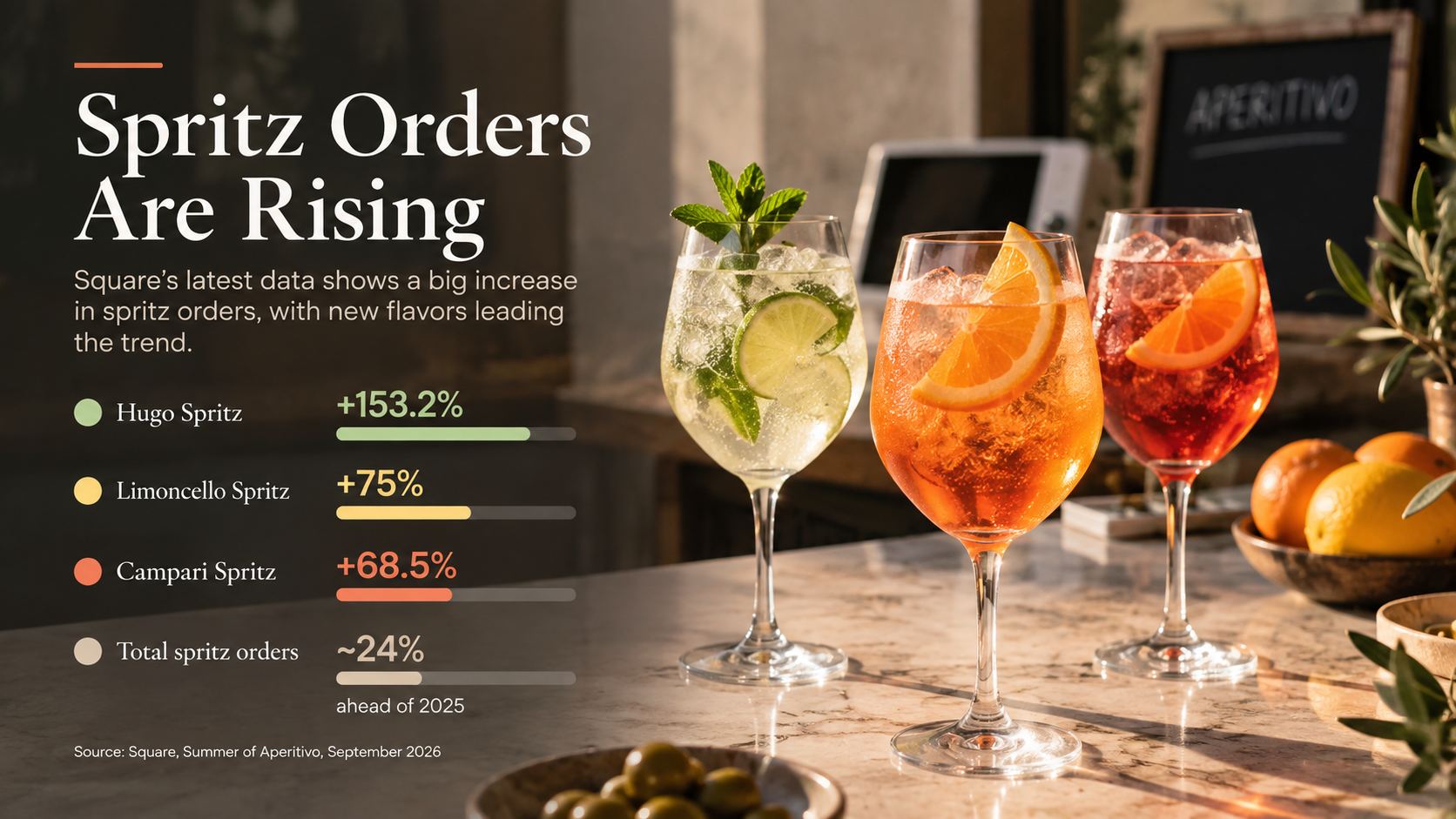
Hugo Spritz orders increased 153.2% year over year across Square sellers. Limoncello Spritz orders rose 75%, while Campari Spritz orders grew 68.5%. Through the first six weeks of summer 2026, total spritz orders were pacing roughly 24% ahead of the same point in 2025. Square also found that much of this recent growth came from venues adding spritzes to their menus for the first time.
A restaurant does not need a national trend to learn something useful from this. Its own orders may show a seasonal drink gaining regular buyers, a lunch item becoming popular with returning customers, or a new category beginning to grow.
Those details help answer a better question than “What sold well?”
Who is ordering it, and what are they doing afterward?
A restaurant may notice that guests who order a seasonal spritz return for another one within two weeks. A neighborhood bar may find that customers who come in for happy hour also order a specific appetizer or return for dinner on another night. A café may see that guests who try a new pastry often add the same coffee. These patterns give the business specific information it can use to plan menus, promotions, loyalty offers, and follow-up messages.
Visit times and frequency add another layer
Square found another shift happening alongside changing drink preferences. Happy hour, defined in the research as 5 PM to 8 PM, accounted for 23.19% of national bar transactions in 2019. By 2025, that share had increased to 24.70%. Late-night transactions moved in the other direction, falling from 24.08% to 21.55%. The happy hour shift appeared across every day Square studied, rather than being limited to weekends.
For an individual restaurant, timing can reveal useful habits that total sales may hide.
A customer may begin ordering lunch every Friday. Another may move from two visits a month to one. Someone who normally orders in the morning may start returning in the afternoon.
Square Customer Directory can track information such as purchase history and visit frequency, while its segmentation tools can help businesses understand buying habits and distinguish groups such as loyal and lapsed customers.
Looking at products, timing, and frequency together gives a restaurant a clearer view of how a customer relationship is developing.
What Is a Restaurant Customer Journey?
A restaurant customer journey is the sequence of interactions a customer has with a restaurant over time, from their first order through future visits, communication, loyalty, and retention.
Think about a customer who orders from a restaurant for the first time.
That first purchase is useful information, but it does not tell the restaurant how the relationship will develop. The customer might return three days later, join the loyalty program, try another menu category, or disappear for two months.
Each outcome creates a different reason for what the restaurant should do next.
A simple customer journey can work like this:
Customer behavior → Relevant action → Customer response → Next action
Consider a regular Friday lunch customer. If that person keeps returning, the restaurant could recognize that habit through loyalty. If their visits suddenly stop, the next step could instead be a timely reminder. If they respond and order again, there may be no reason to send an additional offer.
That is different from planning every interaction around a fixed marketing calendar. The customer’s own activity helps determine the next appropriate step.
For restaurants using Square with Per Diem, this can connect everyday ordering behavior with customer insights, loyalty, direct communication, and the restaurant’s branded ordering experience. Instead of treating each purchase as an isolated transaction, restaurants can start building around the relationship that develops between purchases.
And that is where the idea becomes practical. The same Square data that shows a restaurant what customers have been doing can help shape what happens next.
4 Restaurant Customer Journey Examples Using Square Customer Data
A useful customer journey starts with a real action or change in behavior. That keeps the experience relevant to the person receiving it and gives the restaurant a clear reason for each step. With Per Diem, restaurants can use Square customer data to connect these signals to follow-up messages, loyalty rewards, and direct ordering experiences.
1. Turn a first order into a second visit
A first order can start a simple journey focused on getting the customer back. The restaurant could welcome them, introduce its rewards program, and then see if they return. If no second order follows within a suitable period, a small incentive could give them a reason to try the restaurant again.
The goal is clear: help a new guest take the next step instead of sending the same promotion to every person on the customer list.
2. Follow up on seasonal product interest
Square’s spritz findings are a useful example here. If a restaurant sees growing demand for a seasonal drink, it can identify customers who have already shown interest in that item or category.
Someone who tries the drink could later receive a recommendation for a related menu item. A repeat purchase could unlock bonus loyalty points. As the seasonal menu comes to an end, customers who bought the item could receive a timely reminder.
The promotion follows demonstrated interest rather than assuming the entire customer base wants the same thing.
3. Build on a new visit pattern
Changes in timing can create another useful signal. Imagine a bar sees a customer starting to visit during early evening hours. Instead of sending a broad happy hour offer each week, it could use that activity to introduce a food pairing, promote an upcoming early evening special, or reward another visit during that period.
This turns a pattern the restaurant has already observed into a chance to strengthen the habit.
Learn how Hungry Hobo used timely offers and app messages to build repeat habits, reaching 76% weekly customer retention.
4. Reengage a regular whose visits are slowing down
A regular customer going quiet calls for a different approach. If someone who usually visits several times a month starts coming less often, the restaurant can respond before that person becomes fully inactive.
The first step could be a simple reminder about something they already enjoy. If they still do not return, a stronger offer can follow later. If they do come back, the journey can stop instead of continuing to send unnecessary discounts.
That makes the offer responsive to the customer instead of automatic for everyone.
How Per Diem Helps Restaurants Turn Customer Data Into Action
Seeing a useful pattern is one part of the job. Acting on it at the right time can be harder, especially when a restaurant has hundreds or thousands of customer records.
Per Diem works with your Square data to help you understand customers and put those insights to use. Customer profiles show details such as order history, visit frequency, spending, and favorite items. Customers can be grouped as new, regular, VIP, lapsing, or lapsed, while churn risk can flag someone whose usual ordering pattern is starting to change.
Restaurants can then reach the right customers through push notifications, SMS, or email. Loyalty adds another option when a reward makes sense, while the restaurant’s branded app and web ordering experience give customers a direct way to place their next order.
Together, these tools form a restaurant CRM, which simply means a system for understanding customer relationships and acting on that information.
Per Diem is taking this a step further with Customer Journeys. Instead of setting up every customer interaction separately, restaurants will be able to connect actions into a sequence that responds to what the customer does next.
The aim is not to fill inboxes with extra promotions. It is to make each interaction fit the customer and the moment.
Ask Olivia about your sales, customer behavior, slow days, and opportunities, then turn those insights into campaigns you can act on. Explore Olivia.
FAQs
What is a restaurant customer journey?
A restaurant customer journey covers the interactions a guest has with a business across different stages of the relationship. It can begin with a first purchase and develop through repeat orders, rewards, personalized communication, and retention efforts based on the customer’s activity.
What customer data can restaurants use from Square?
Square Customer Directory can include customer details, purchase history, favorite items, visit frequency, loyalty status, and other information collected through connected Square products. Available information can vary based on the Square tools a business uses.
How can restaurants use Square customer data to increase repeat visits?
Restaurants using Per Diem can look for useful signals such as a first purchase, frequent visits, interest in certain products, or declining activity. Those insights can then inform follow-up communication, loyalty rewards, personalised product recommendations, or return offers that fit the customer’s recent activity.
What is the difference between a customer journey and a marketing campaign?
A marketing campaign usually communicates one promotion or message to a chosen audience. A customer journey can connect several interactions over time and change according to the customer’s response. Both can work together as part of a restaurant’s marketing strategy.
Final Thoughts
Square’s latest data shows how quickly ordering preferences and visit patterns can move. Similar changes happen inside individual restaurants every day, often at a much smaller scale.
The opportunity is to notice the signals that matter and use them thoughtfully. A first order, a new favorite, a growing routine, or a drop in visits can each call for a different response.
Customer data becomes more useful when what a restaurant learns from one interaction helps improve the next one.
Per Diem helps restaurants using Square connect customer insights, direct marketing, loyalty, and branded ordering so those insights can become part of the customer experience.
See how Per Diem brings customer insights, marketing, loyalty, and ordering together to help you build stronger customer relationships. Book a free demo.
Download the Free Playbook
8 customer journeys to turn behavior into repeat visits
We'll only use your details to share this resource and the occasional update.