






















Promotions
How to Use Restaurant Menu Promotions to Drive More Orders This Fall
Oct 5, 2026
TLDR
Restaurant menu promotions can make the difference between a seasonal item getting noticed or getting lost in the menu. This matters even more in fall, when coffee shops and restaurants are adding new drinks, flavors, and limited-time specials to online ordering menus. But which promotions actually encourage customers to stop, click, and order? Some of the most effective approaches are surprisingly simple, and they do not always require a discount. Here is what works and how to use it on your menu.
Why Restaurant Menu Promotions Matter During Seasonal Changes
Fall brings plenty of menu changes, from pumpkin drinks and apple pastries to new sandwiches and seasonal flavors. But putting a new item on your online menu does not mean customers will find it. Regulars often know exactly what they want and can move from opening your app to checkout without looking at much else.
Seasonal releases are also becoming much more common. Technomic data reported by Restaurant Business found that limited-time menu launches increased from 16,187 in 2019 to 41,707 in 2025, with beverages accounting for the largest share. For coffee shops and restaurants, that means seasonal items are competing for attention across an increasingly busy menu.
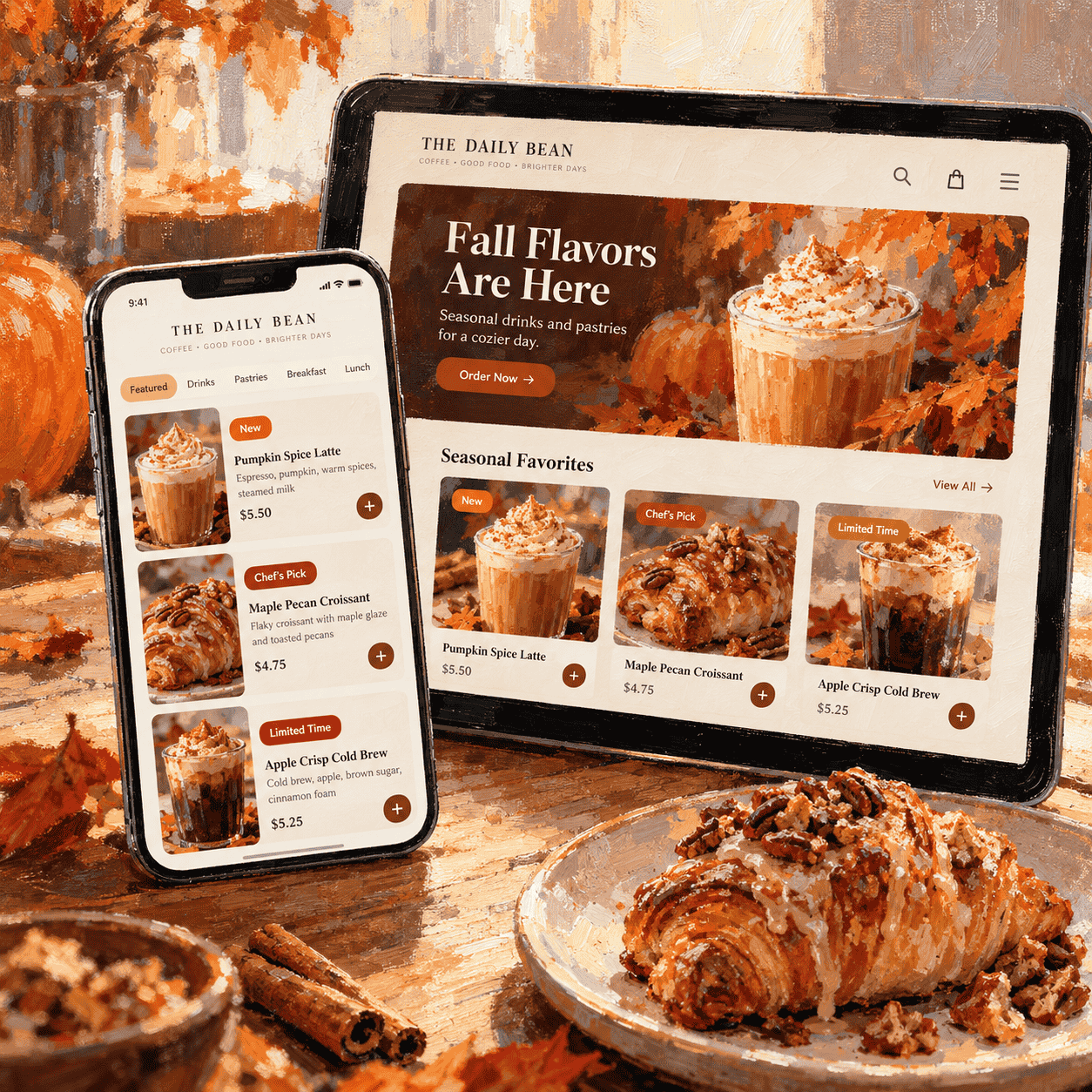
A short label can give an item the context it needs. “New for Fall” tells a returning customer something has changed, while “Barista’s Pick” gives someone a recommendation when they are deciding between several drinks. You are helping customers spot what they might otherwise miss while they are already deciding what to order.
And this does not have to be limited to a big fall launch. A returning favorite, weekend special, signature dish, or weekly flavor can all be promoted when you want to bring them forward.
What We Learned From Menu Promotions in Per Diem
Looking at how restaurants and coffee shops use menu promotions in Per Diem, we found that merchants combining promotional labels with placements such as app banners and posts can see around 15 to 20% higher app engagement. The strongest results were not coming from complicated copy. Two simple approaches kept standing out: curation and scarcity.
Curation helps customers choose
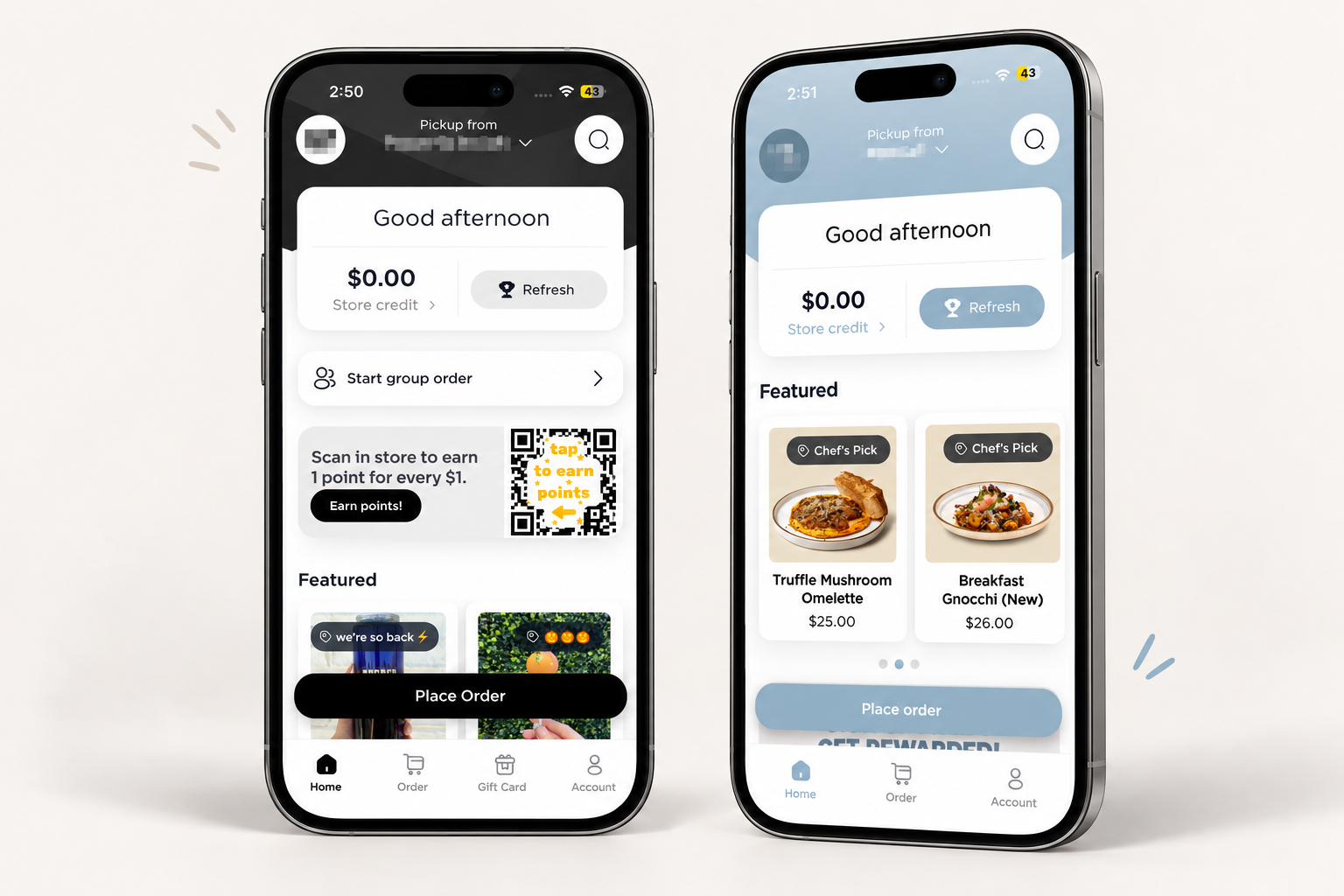
Labels such as “Chef’s Pick,” “Staff Favorite,” and “Must Try” work much like a recommendation from someone behind the counter. They are useful when customers have several good options and need a little help deciding where to start.
Leaf Cafe is one example. After using recommendation-based labels such as “Chef’s Pick,” engagement with its menu promotions increased significantly. The label works because there is very little to interpret. It simply tells the customer that this item is worth considering.
This can be especially useful for larger menus. If you sell twelve sandwiches or ten specialty drinks, highlighting one or two choices can help customers decide without asking them to sort through everything themselves.
Scarcity gives customers a reason to act
Scarcity serves a different purpose. Labels such as “Leaving Soon,” “Limited Time,” and “Last Chance” work when an item has a genuine end date and you want customers to know before it disappears.
Pepper Grind Coffee saw one of the strongest relative lifts among the merchants we reviewed when using this approach. It is particularly useful for seasonal drinks, short menu runs, weekend specials, and small batch products.
The important part is keeping the message genuine. If something will still be available three months from now, it should not be presented as urgent. Save scarcity for the moments when waiting really could mean missing out.
Four Types of Menu Promotions You Can Use
Once you know what you want to achieve, choosing the promotion becomes much easier. Most menu promotions can fit into four practical groups.
Curation works when you want to recommend something. “Chef’s Pick,” “Barista’s Pick,” or “Staff Favorite” can bring attention to signature products or choices that deserve a little help standing out.
Scarcity fits items with a real deadline. “Leaving Soon,” “Final Week,” or “Limited Time” can make the timing clear for seasonal products, weekend specials, and short releases.
Newness works when the item itself is the news. “New This Week,” “Just Added,” or “New for Fall” helps regular customers quickly see what has changed since their last order.
Rotation is useful when part of your menu changes regularly. A bakery might use “This Week’s Bake,” while a coffee shop could feature a “Monthly Pick” or “Flavor of the Week.” It gives repeat customers something current to look for each time they return.
Whichever type you choose, keep it easy to understand at a glance. Customers are ordering food, not reading ad copy. The best menu promotion usually says exactly what they need to know in only a few words.
Put These Ideas to Work on Your Own Menu. Connect your Square POS and Sign Up with Per Diem to start getting more orders.
Promote the Item Before You Discount It
When you want to sell more of an item, a discount can feel like the easiest option. But lowering the price should not always be the first move. Sometimes the item already has enough appeal and simply needs better visibility.
A seasonal latte, new pastry, or signature dish may sell better once customers understand why it is worth trying. Highlighting it as a staff favorite, new release, or short-term special gives you a way to test that interest while keeping the original price.
This is particularly useful for new products. If an item performs well without an incentive, you learn that customers are interested in the product itself. If you immediately attach a discount, it becomes harder to know if people wanted the item or simply wanted the deal.
Discounts still have their place, especially when you have a clear sales goal behind them. But before giving up margin, see what better menu merchandising can do first.
Connect Menu Promotions With Your App and Web Ordering
A customer may first hear about your seasonal menu before they ever reach the menu itself. That is why the promotion should feel connected across the ordering experience.
For example, you could send a push notification announcing your fall collection, use an app banner to feature it when customers open the app, and then make the relevant products easy to identify once they reach the menu. Each placement has a different job, but they all lead toward the same order.
Per Diem lets restaurants use menu promotions alongside app banners, posts, and push notifications within their branded ordering experience. Instead of relying on a customer to discover a campaign in one place, you can carry it from the first message through to the menu.
Keep each placement focused. A notification can get someone interested, a banner can introduce the feature, and the menu can help them find the product. There is no need to repeat the same copy everywhere.
Keep Your Online Menu Active
Your online menu should change with what is happening in your business. If you have a new product this week, a weekend special on Friday, or a seasonal favorite nearing the end of its run, your menu can reflect that.
Start with a few products rather than trying to promote everything at once. Give each promotion a clear purpose, watch how customers respond, and remove or change it when it is no longer relevant. An old “New” label that has been sitting there for months quickly loses its meaning.
Fall is a good time to start because customers already expect menus to change. But the same approach works throughout the year. Your next opportunity could be a holiday menu, summer drinks, a new lunch range, or simply an item you want more customers to discover.
Final Thoughts
Small changes in how you present your menu can influence what customers notice and consider ordering. With Per Diem, you can promote key items across your branded app and web ordering experience while keeping everything connected to your restaurant.
Want to see how it works for your menu? Book a demo with Per Diem and see how you can turn more menu visits into orders.