




















Customer Loyalty
Your Customers Who Come Back Usually Do So Within 14 Days. Here's What to Do.
Nov 10, 2026
TLDR
Your next regular could be someone who ordered from you yesterday. But after that first purchase, what brings them back? Per Diem's analysis of over 600,000 restaurant customers found that half of those who placed a second order returned within 14 days. That's a useful insight for your restaurant if you're trying to build repeat business. The opportunity is to make those early days count, with a good ordering experience, relevant communication, and a clear reason for customers to choose you again.
Why the First 14 Days Matter for Restaurant Customer Retention
According to Per Diem's Restaurant Retention Ledger 2026, one in four returning customers placed their second order within five days. Others took several weeks.
This doesn't mean every restaurant should expect customers back within two weeks. Someone buying coffee on their way to work has a different routine from a family ordering dinner on Friday nights.
The useful lesson is to pay attention to how quickly your own customers typically reorder.
For example, if most of your coffee shop's regulars visit twice a week, a new customer who hasn't returned after ten days may need some attention. At a restaurant where guests usually order once or twice a month, that same gap could be perfectly normal.
Start by checking how long returning customers usually take to place their next order. Look at patterns by location, ordering channel, or customer group if you have enough data. This gives you a better starting point for deciding when to reach out, rather than using the same schedule for every guest.
Before Asking Customers to Return, Get the First Experience Right
A follow-up message works best when the customer already has a positive reason to visit again.
Think about a guest who orders lunch through your website. The food arrives as expected, pickup takes two minutes, and checkout was easy. Ordering from you again feels like a simple choice.
Now imagine the opposite. The menu was confusing, the order wasn't ready at the promised time, and the customer had trouble finding where to collect it. A discount next week may not be enough to change that impression.
Before spending money on return offers, review the experience your new customers receive.
Check that your online menu is accurate, pickup instructions are clear, order preparation times are realistic, and staff can handle questions or problems quickly. Read recent reviews and look for complaints that appear repeatedly.
You can also ask customers for feedback shortly after their purchase. A simple question about their experience may reveal problems you wouldn't notice from sales reports alone.
Fixing a recurring pickup issue or simplifying checkout could give customers a better reason to return than another promotion.
What to Send Customers During the First 14 Days
Once the ordering experience is working well, the next step is staying in touch without becoming another business sending constant offers.
Here's a practical communication plan you can adapt to your restaurant.
Day 1: Thank them and make the next order easy
Send a short thank you through a channel the customer has agreed to receive messages on. Include a direct ordering link, or introduce your loyalty program if they haven't joined.
Keep the message helpful. A customer who enjoyed their first visit doesn't immediately need a discount.
Days 4 to 5: Give them something relevant to consider
For a coffee shop customer who ordered a latte, this could be a reminder about breakfast items or a popular seasonal drink. For someone who bought a family meal, it might be a weekend special.
Choose one clear message connected to what the customer might enjoy next. Avoid sending your entire menu or several promotions at once.
Days 12 to 13: Follow up only if they haven't returned
If the customer still hasn't placed another order, consider a small incentive, a reminder about available rewards, or an invitation to try something new.
Someone who has already ordered again should not receive a message treating them as a first time guest.
This is where automated marketing becomes useful. With Per Diem Sequences, restaurants can set messages for new customers and automatically stop that sequence when someone moves into the regular customer stage.
The suggested days are a starting point, not a proven formula. Adjust the timing based on your customers' ordering habits, and avoid sending messages without a useful reason.
Use Customer Data to Make Every Message More Relevant
Not every customer needs the same reminder. Someone who orders breakfast before work may be interested in a morning special, while a customer who usually buys dinner for the family might respond better to a weekend offer.
To make those decisions, you need a clear view of your customers.
A restaurant CRM helps you understand what guests order, how often they visit, and when they last purchased. With Per Diem's CRM, restaurants can bring Square POS and online ordering data together, organize customers into groups, and use that information to create more relevant campaigns.
The communication channel matters, too. Some customers prefer email, while others may respond to an SMS or an app notification. Use the channels customers have opted into and pay attention to which ones lead to actual orders.
One practical tip: don't assume a single purchase tells you everything about someone's preferences. Start with what you know, observe how their behavior develops, and make your messages more personal over time.
Make Repeat Ordering Easy and Worthwhile
Getting someone interested in another visit is one thing. Making it convenient enough to become a habit is another.
Consider a customer who buys the same cappuccino every morning. If they can open your restaurant's app, find their favorite order, and pay with Apple Pay in seconds, there's very little effort involved in ordering again.
According to Square's 2026 Local Economy Report, regular customers placed the same food and beverage order 59% of the time across the markets studied. Making it easy to save and reorder favorites can help turn familiar purchases into a regular habit.
This is where direct ordering and loyalty programs can work together.
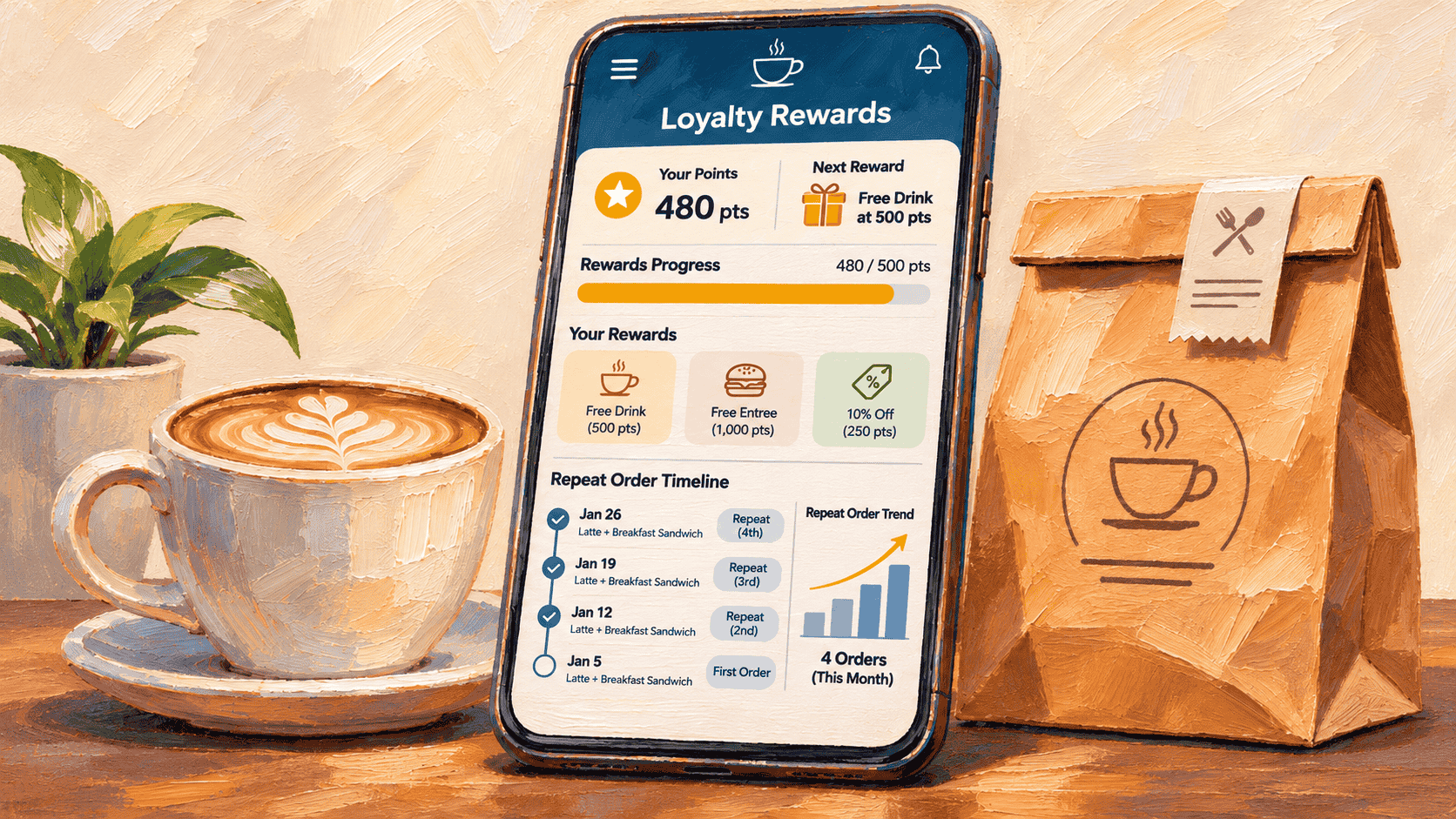
A good loyalty program gives customers something to look forward to without making them feel pressured to spend. You could offer points toward a free drink, a reward after a certain number of visits, or occasional challenges that encourage customers to try something new.
Per Diem supports these experiences through a branded ordering app, loyalty rewards, and monthly challenges. Restaurants can combine convenient ordering with rewards customers can earn through continued visits.
Keep the rewards achievable and easy to understand. If someone needs to make 20 purchases before receiving anything meaningful, the program may do little to encourage an early return.
How to Measure Restaurant Customer Retention
Once you've started making changes, how do you know they're working?
Email opens and promotion clicks can tell you if customers noticed a message. But your sales data should show if those efforts are followed by another purchase.
Focus on three useful measurements:
- Second order rate: What percentage of customers who make their first purchase return for another? Track customers from the same signup or first purchase period so you're comparing similar groups.
- Time to second order: How many days pass before customers order again? Compare this across locations, customer groups, and different periods.
- Repeat purchase frequency: After the second purchase, how often do customers continue ordering? This helps you understand if occasional visits are becoming a routine.
Review these figures regularly, especially after introducing a new campaign or loyalty offer. Compare results against an earlier period, and account for factors such as seasonal demand or menu changes before drawing conclusions.
A successful campaign should ultimately contribute to customers placing orders, not simply interacting with your marketing.
Turn More First Orders Into Lasting Customer Relationships
The first 14 days offer a useful opportunity to understand and engage new customers, but there's no single schedule that works for every restaurant.
Start with your customers' actual ordering patterns. Make it convenient to return, send messages that have a purpose, and give guests rewards they'll genuinely value.
If you want to put these ideas into practice, Per Diem brings customer data, automated marketing, direct ordering, and loyalty together to help restaurants build stronger relationships with their guests.
*Ready to turn more first orders into repeat visits? Book a demo today. *