


















How to Personalize Restaurant Marketing Using Purchase History
“Pizza lovers” sounds like an audience ready for a campaign. But it could include someone who orders every Friday, someone who bought once last summer and someone who placed a large order for the office.
The name tells you little about what those customers should receive.
Useful personalization starts with a clear reason to contact someone. Purchase history helps you find that reason.
How Do You Build a Useful Customer Group?
Define the behavior behind the label.
For an illustrative “pizza regulars” group, you might choose guests who purchased pizza on at least two separate occasions in the past 60 days. Separate occasions matter: buying six pizzas for one meeting is different from choosing your restaurant six times.
The period should fit your business. A weekday lunch restaurant and a special occasion dining room will have different expectations for repeat purchases.
Then connect the audience to a purpose. Pizza regulars could be a sensible group to introduce to a new roasted mushroom pizza. Guests who have already tried it may need a different message, or no message at all.
Customer groups become easier to use when you can explain both who belongs and why you want to reach them.
What Should Change Between Customer Groups?
The food you feature, the reason to order and the next step can all change.
Consider the same new pizza launch:
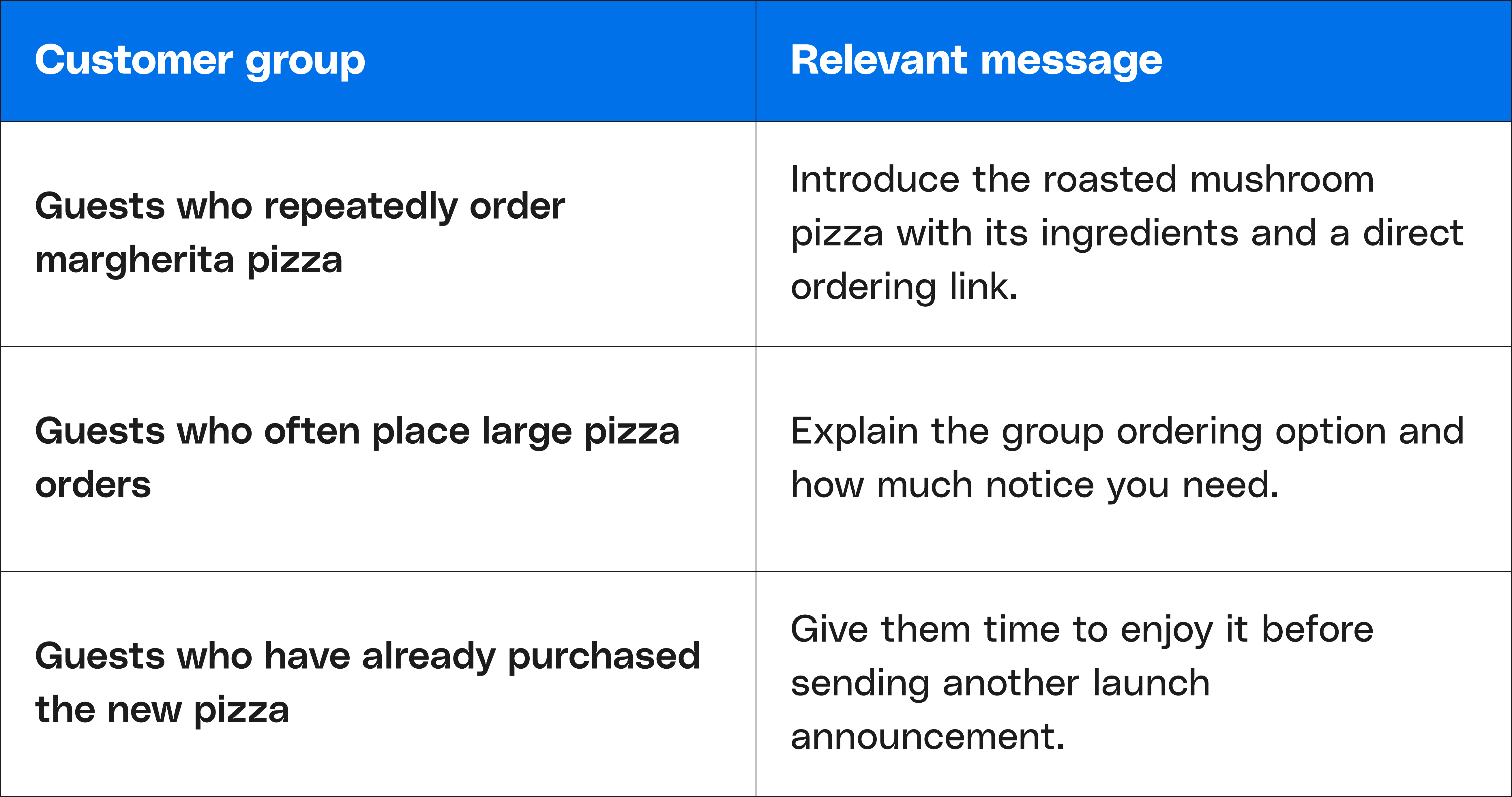
Each message draws on something the restaurant knows. None requires a discount.
Familiar favorites deserve attention, too. Square’s 2026 Local Economy Report found that regular customers made the same food and beverage order 59% of the time. A campaign can therefore be useful by making a familiar choice convenient to order again.
How Much Can You Infer From an Order?
Treat purchases as evidence of behavior, with room for uncertainty.
A vegetarian pizza order does not establish that the customer is vegetarian. A family meal purchase does not tell you their household size. Someone may be ordering for other people.
Keep the wording focused on the food:
Our roasted mushroom pizza is here, with garlic cream, mozzarella and fresh thyme. Available for pickup from 5 p.m.
That is specific without claiming to know the guest personally. Recognition should make choosing easier, without making the customer wonder how much you are assuming about them.
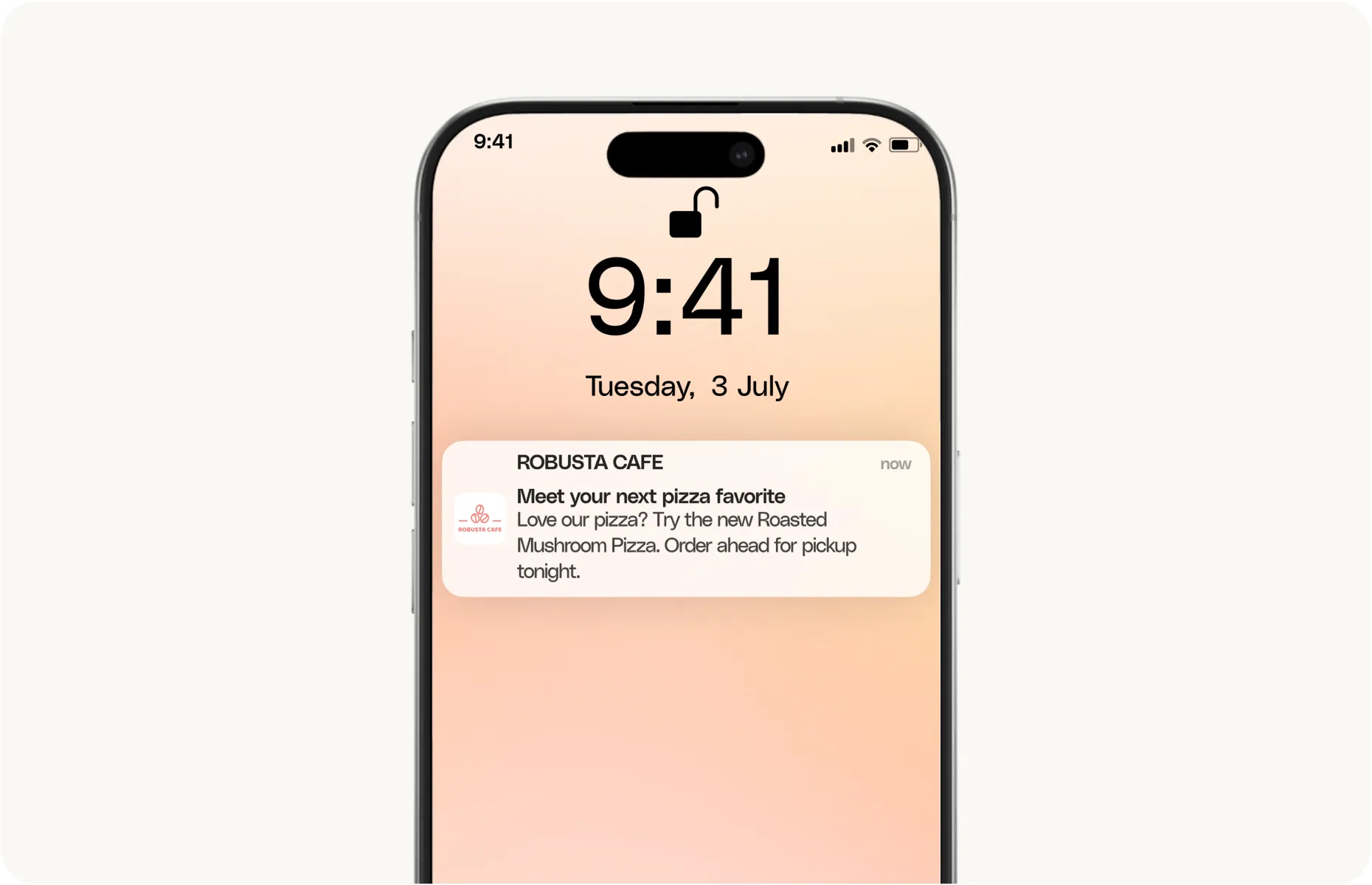
How Do You Keep Personalization Relevant?
Use recent activity and review the audience before each campaign. Check a few customer histories against the group’s rules. Look for old purchases, canceled orders or a single large transaction that could distort your interpretation.
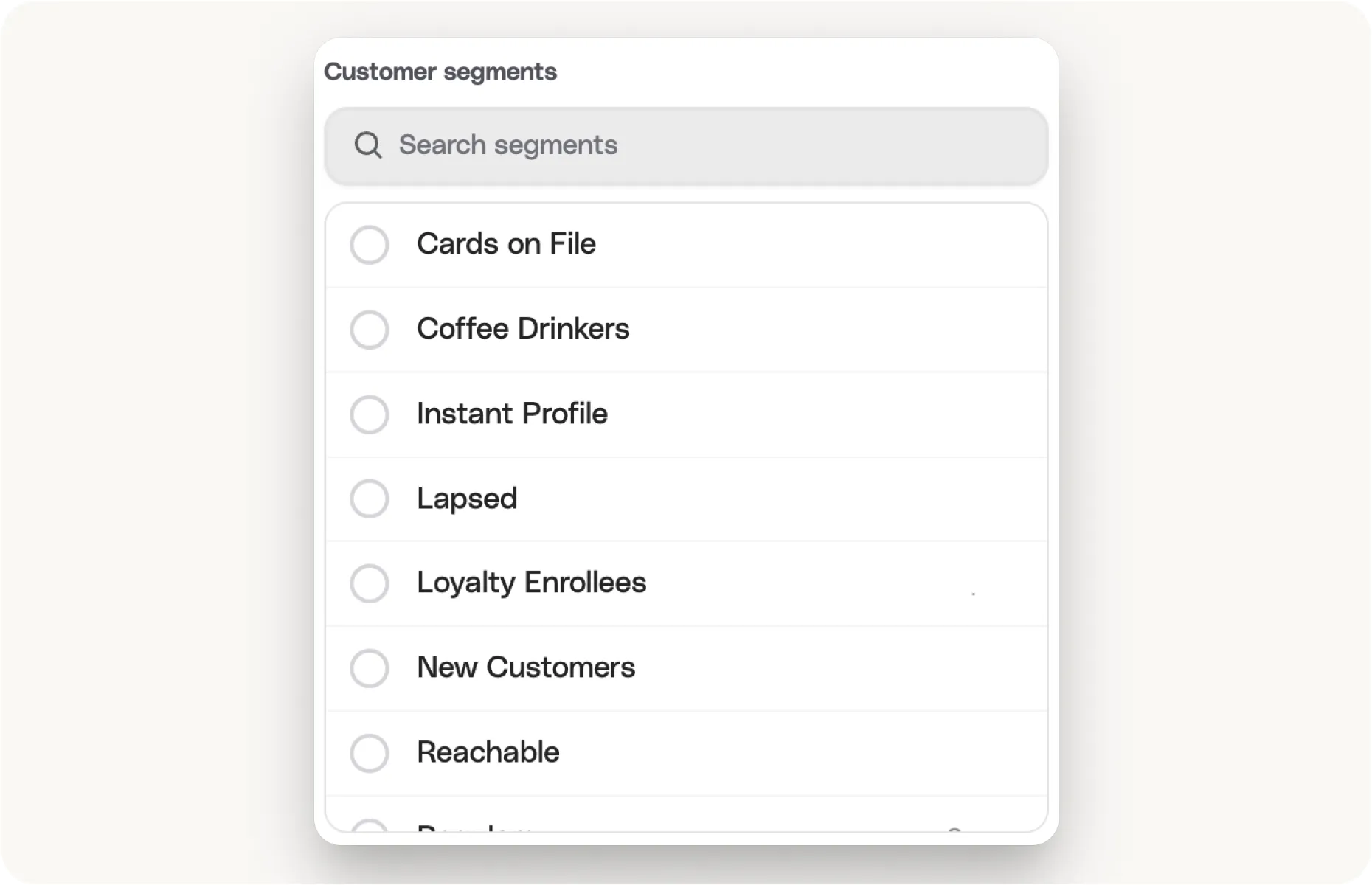
A saved customer list reflects who qualified when you created it. Unless you update it, someone can remain on that list even after their next purchase changes what they should receive. A dynamic segment updates membership as customers meet or stop meeting its rules.
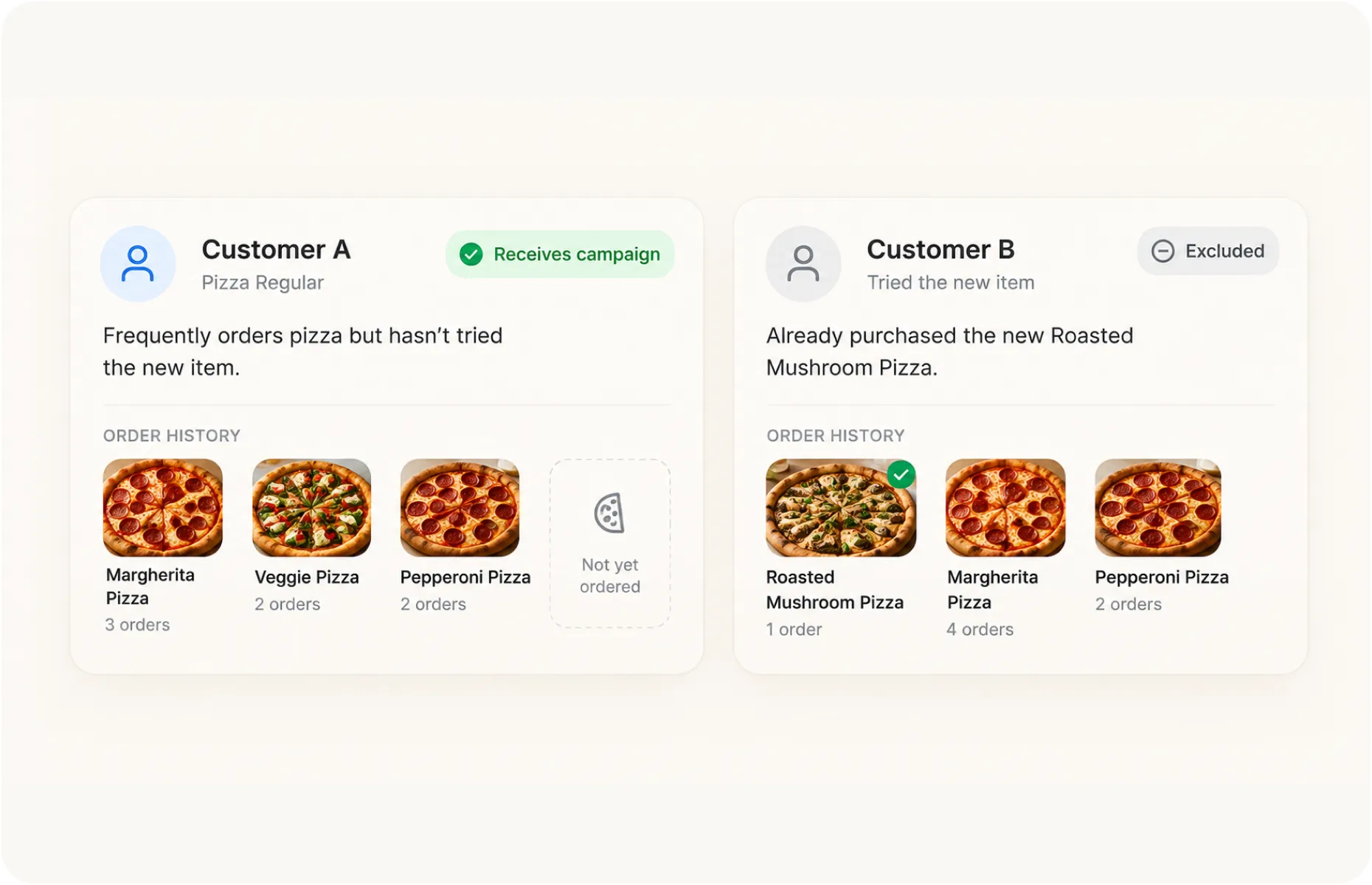
For the roasted mushroom pizza launch, you could define the audience as guests who regularly order pizza but have not yet tried the new one. A margherita regular qualifies for the announcement. Once they purchase the roasted mushroom pizza, they no longer qualify for that introductory message.
That exclusion matters. You can introduce the pizza to customers who have a reason to try it while avoiding another “try our new pizza” message to someone who ordered it yesterday. Set this up using the purchase filters and exclusions your platform supports.
Per Diem’s AI assistant, Olivia, can help you develop a campaign for a defined group. Give her the qualifying behavior, the menu details, and the purpose of the message. A clear audience gives the assistant something useful to write for.
Before sending, finish this sentence: “This guest has a reason to care because…”
The answer should come from what you know about their activity.Put your Square customer groups to work
See how Per Diem helps you use your existing Square segments for more relevant restaurant marketing. Book a demo