



















How to Turn Customer Data Into Marketing Opportunities
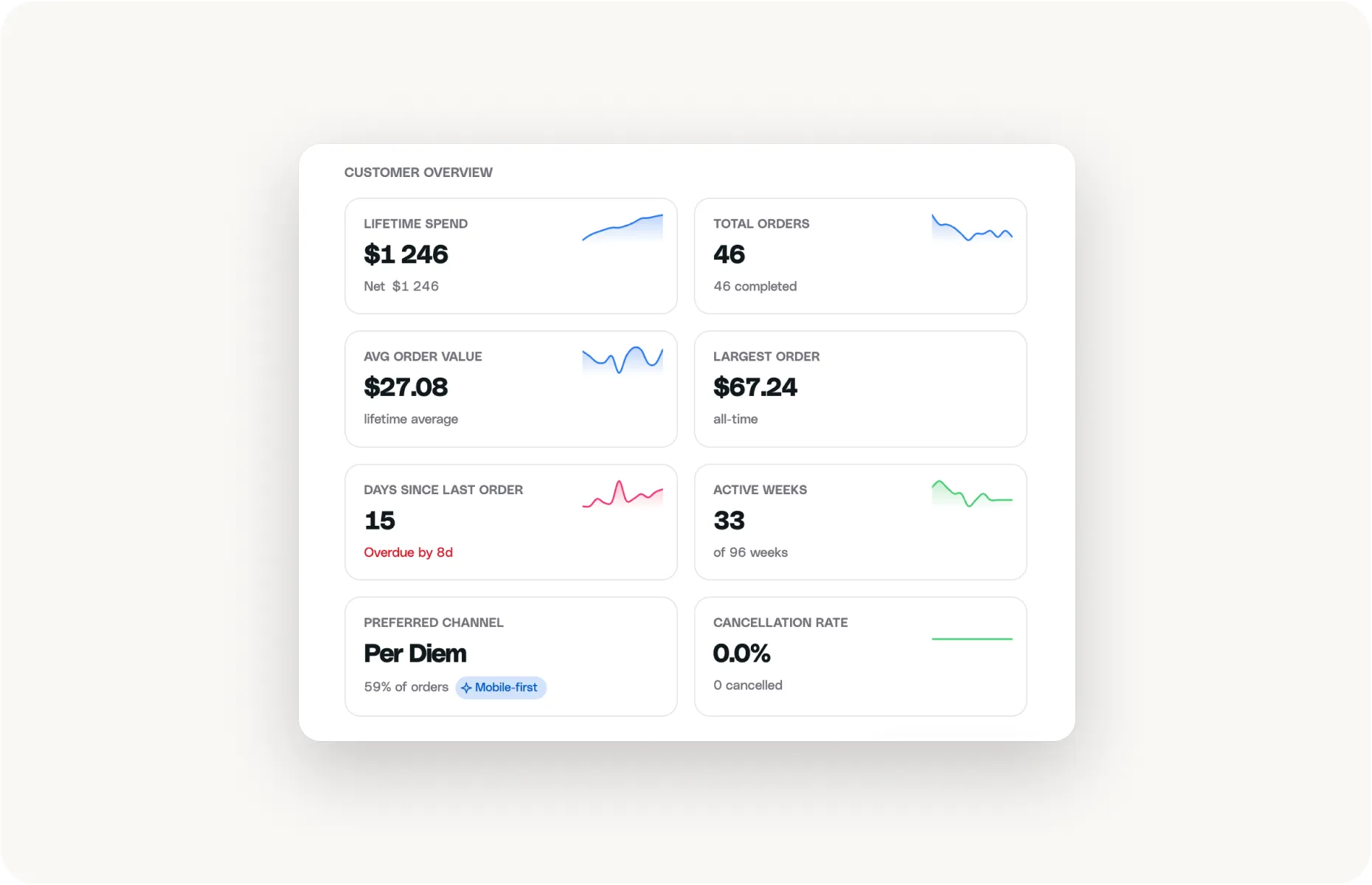
Your bestselling dish tells you what people buy. It does not tell you whether they come back.
A new hot honey chicken sandwich might bring in plenty of first orders, while your tomato soup keeps the same lunch regulars returning each week. The sandwich gives you an audience to follow up with. The soup gives you a familiar favorite to feature when inviting regulars back.
Customer data becomes more useful when you connect what sold with who bought it and what happened afterward.
Which Menu Items Are Associated With Repeat Visits?
Look beyond the item sales ranking. Examine whether guests who purchase a particular item return, how soon they return, and what they choose next.
For example, your restaurant could review guests whose first purchase included its lunch bowl. If many return and order the same bowl, that suggests a product people are willing to build into their routine. If returning guests frequently add a side, that pairing may deserve more visibility.
Make the comparison fair. Guests who first ordered last week have had less opportunity to return than those who ordered two months ago. Choose a completed first purchase period and give everyone the same amount of time afterward.
These patterns help you form a useful hypothesis. They do not prove that the bowl caused the return. Convenience, location and service may also explain it.
Are New Customers Replacing Regulars You Are Losing?
A steady customer count can hide a changing business.
One of Square’s latest reports found that regular customers generated six times the annual revenue of transient customers across U.S. local businesses. The report defined a regular as someone who purchased from the same business on at least four separate days within a year.
For a restaurant, losing a weekly lunch customer can mean losing several orders a month. One new guest does not automatically replace that business.
Consider this illustrative example:
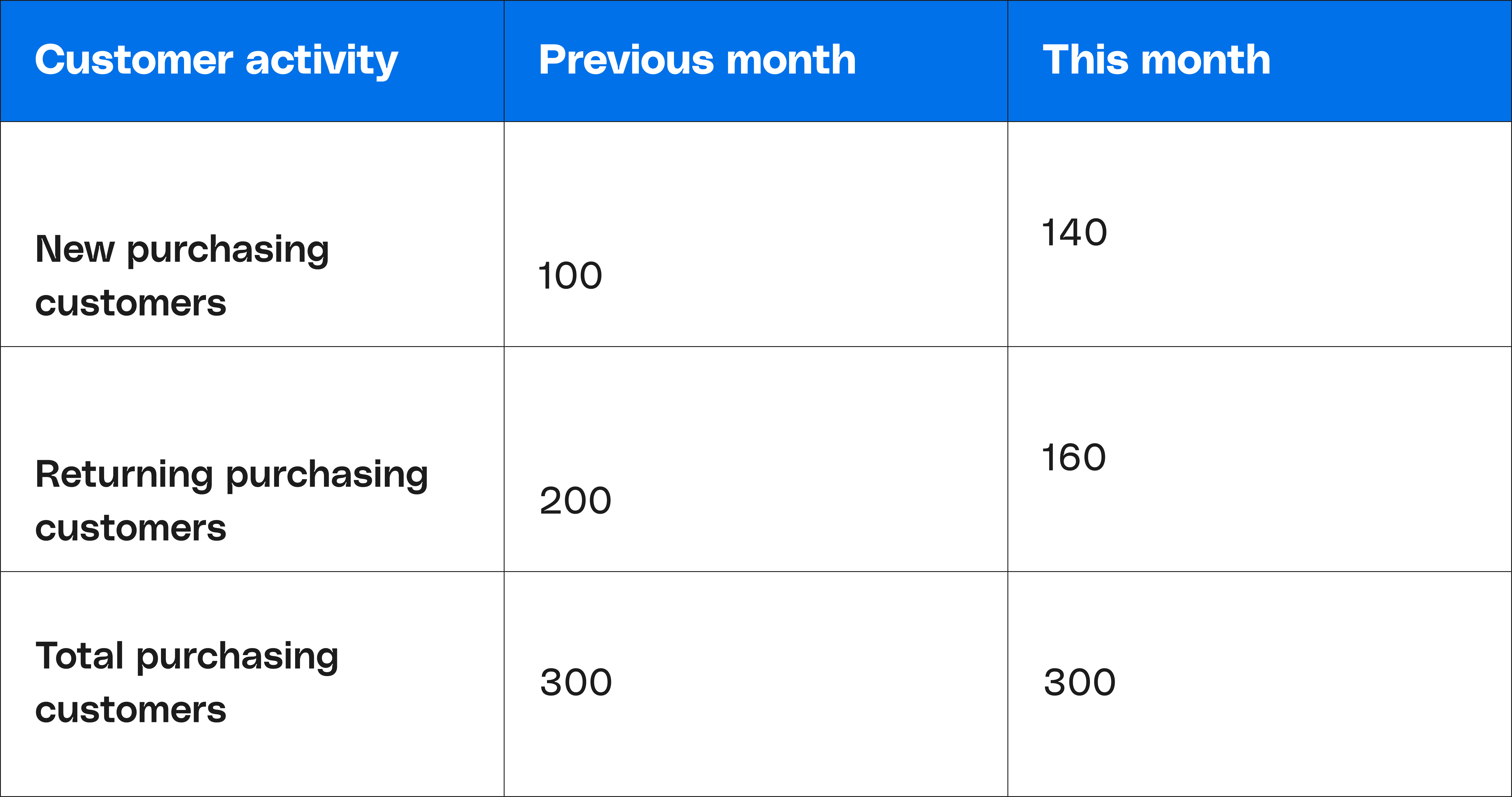
Both months served 300 customers. But this month, fewer were returning guests. The total alone would miss that shift.
Before launching another acquisition offer, review which previously active customers have stopped purchasing. Check their order history across locations and channels wherever records are linked. Someone who now buys at the counter instead of through your app may still be a regular.
Then look for a useful reason to reconnect. If a guest repeatedly ordered tomato soup for lunch, its return to the seasonal menu could give your message a specific purpose.
Understanding who has gone quiet helps you decide whether your next campaign should focus on bringing familiar customers back.
Is Growth Coming From More Orders or Larger Checks?
Revenue alone cannot answer this question. Review order count and average order value alongside it.
In Groucho’s first ten weeks with Per Diem, online revenue was 6% higher than during the same dates a year earlier. The average check stayed around $25. More orders accounted for most of that growth, which is why looking at revenue alone would miss part of the story.
That distinction changes the marketing opportunity. If people are ordering more often, protecting that convenience matters. If revenue rises mainly because prices increased while orders decline, the next question is whether guests are finding fewer occasions to purchase.
A higher sales figure can therefore lead to very different decisions.
Which Opportunity Should You Act On First?
Choose a pattern that is clear enough to investigate and practical enough to act on.
Before committing, check three things: whether the relevant customers can be reached, whether the proposed action makes financial sense and whether your team can deliver the experience.
Write the opportunity in one sentence:
Guests who first tried our lunch bowl often return for it. We will test whether highlighting easy reordering helps more of those guests make a second purchase.
You now have a reason for the campaign and a result to examine. The next step is deciding exactly who belongs in that audience.