





















Hospitality
How to Become Your Own ezCater for Direct Catering Growth
Dec 26, 2025
TLDR
A large catering order hits your kitchen, and suddenly the numbers look different. Higher ticket, steady volume, strong margins. Then the event ends, and the buyer vanishes. This happens every day to restaurants that rely on third-party catering platforms. Catering has become one of the most valuable revenue channels in food service, yet many operators still treat it as borrowed business. Bringing catering in-house changes the outcome. It turns single orders into long-term accounts and puts restaurants back in control of their customer relationships. This is not about rejecting marketplaces. It is about using them as a starting point and building something stronger on your own terms.
Why Catering Is A High-Impact Revenue Channel For Restaurants
Catering is no longer limited to weddings or holiday parties. Offices order weekly lunches, healthcare teams schedule recurring meals, and companies host regular events that need reliable food partners. These orders are consistent, planned, and significantly larger than dine-in or delivery tickets.
Bigger Orders With Stronger Returns
Catering orders often deliver twice the average order value compared to standard service. Industry data shows catering can generate up to 6 times higher return due to scale, planning efficiency, and lower acquisition cost per dollar earned. One drop off can equal dozens of individual transactions.
For restaurants, this means better use of labor, predictable prep, and smoother operations. These advantages only grow when customers return again instead of placing a single order and moving on.
Predictability Beats Volume Chasing
One-off catering sales feel good in the moment, but do little for stability. Long-term catering clients bring consistency. They order on schedules, plan ahead, and communicate clearly. This reduces stress on the kitchen and improves forecasting.
Restaurants that treat catering as a core service rather than a bonus see steadier cash flow and fewer slow periods. The key difference is ownership of the relationship.
The Trade Off Of Third-Party Catering Platforms
Catering marketplaces have value. They help restaurants get discovered and fill empty capacity. The challenge appears after the first transaction.
Customers Belong To The Platform, Not To You
When an order comes through a third party, the relationship stays there. Customer data, ordering habits, and contact details remain outside your reach. You cannot easily follow up, personalize offers, or build direct loyalty.
This creates a ceiling on growth. Each order starts from scratch because the connection never deepens.
Side-by-Side Competition Erodes Loyalty
Marketplaces are built for choice. A buyer who enjoyed your food last time is encouraged to try something new next time. Your restaurant competes not on relationship or consistency but on placement and price.
For catering, this dynamic works against restaurants. These buyers value reliability and familiarity. When everything looks interchangeable, loyalty fades fast.
Why Bringing Catering In-House Changes The Outcome
Owning catering does not mean cutting off discovery channels. It means shifting the long-term relationship into your own system where you control the experience.
Direct Ordering Builds Trust
When customers order directly from your restaurant, communication feels clearer and more personal. Menus reflect your strengths. Follow-ups feel intentional. Adjustments happen faster.
Over time, this builds confidence. Clients stop searching because they know what to expect from you.
Turning One-Time Orders Into Repeat Accounts
In-house catering allows restaurants to recognize repeat buyers and reward them in ways that matter. Priority scheduling, custom menus, flexible billing, and tailored pricing create reasons to return.
Recent food service research shows repeat catering clients are far more profitable than new ones due to lower marketing costs and higher order frequency. Loyalty is not a perk anymore. It is a strategy.
How Per Diem Catering Helps Restaurants Take Back Control
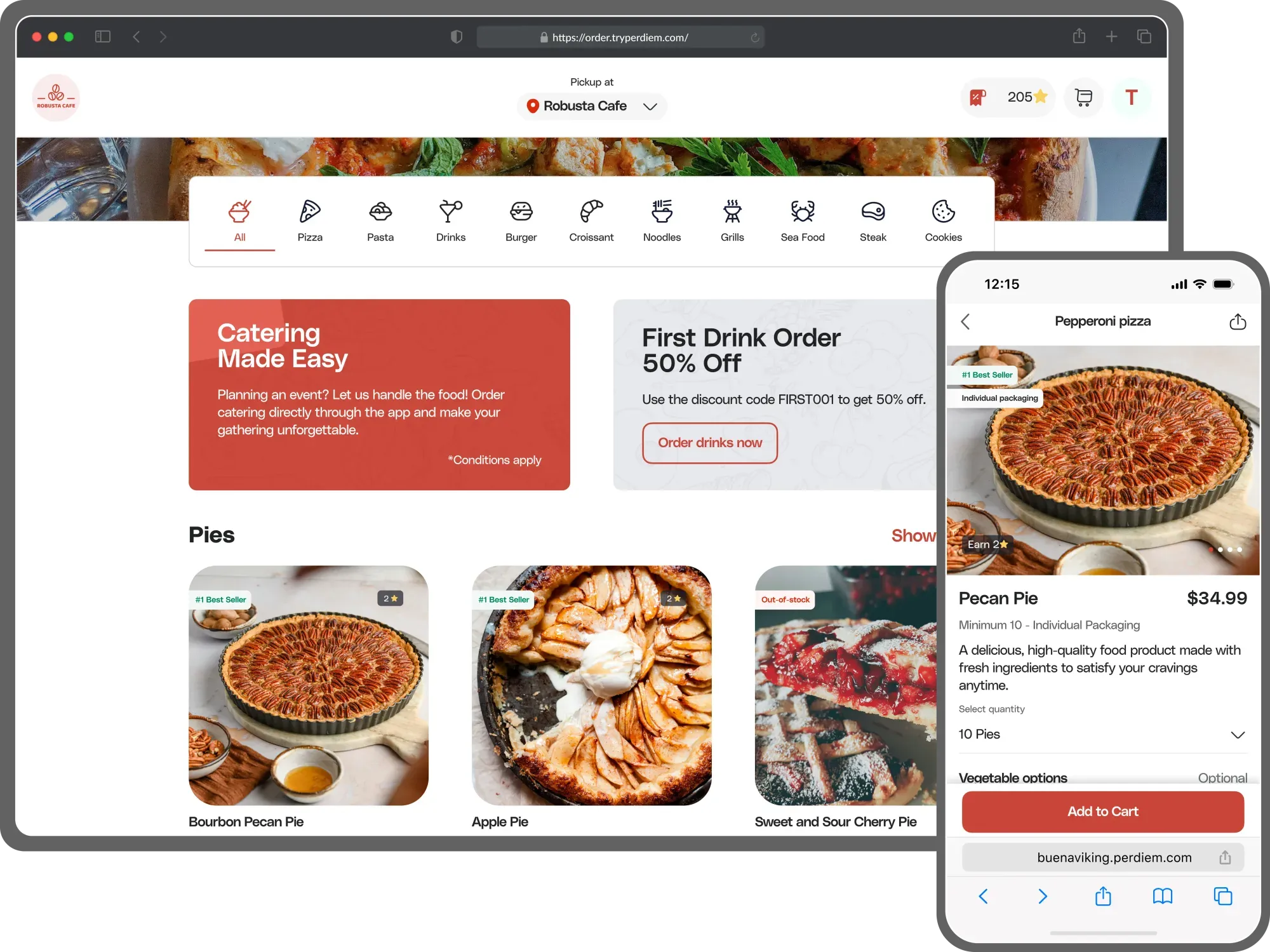
Offering catering does not need to be complicated. It needs to integrate seamlessly with their existing operations. Per Diem makes it easy to manage large orders, communicate directly with customers, and grow your catering business without giving control to a third party.
With Per Diem, catering lives under your brand. Customers order directly from your restaurant, see your menus, and interact with your team. There is no competing list of other restaurants besides you. Every order strengthens your relationship, not someone else’s.
Restaurants gain full visibility into customer behavior. You see who orders often, what they prefer, how far ahead they plan, and how much they spend. This insight allows smarter prep, better menu decisions, and smoother service. Instead of guessing what catering clients want, restaurants respond with confidence and clarity.
5 KPIs of catering profitability for restaurants
Moving Customers From Marketplaces To Direct Ordering Without Friction
Third-party platforms like ezCater do play a role in discovery. They help restaurants get noticed by new customers. The shift happens after trust is earned.
Focus On Experience First
The first catering order sets the tone. Food quality, packaging, timing, and communication matter a lot. When the experience feels seamless, customers are open to continuing the relationship directly.
Your restaurant can include clear messaging that future orders are easier and more flexible when placed directly.
Offer Value That Platforms Cannot
Direct catering allows businesses to provide benefits that marketplaces cannot match. Custom menus, pre-order and post-order communication, faster changes, and loyalty rewards create a clear reason to order again.
Customers care about reliability. When restaurants deliver that consistently, switching platforms feels unnecessary.
Why Loyalty Works Better When Restaurants Own Catering
Catering clients are not your casual buyers. They plan, manage budgets, and look for partners they can trust in the long run.
Simple Loyalty That Feels Personal
Instead of generic discounts, you can offer meaningful rewards. Early access to busy dates, custom bundles for recurring meetings, or flexible invoicing options feel thoughtful and practical.
These gestures show appreciation and build long-term value without racing to the lowest price.
Happy catering clients talk. Office managers share vendor names. Event planners recommend partners they trust. These referrals carry far more weight than ads or listings.
When restaurants own the relationship, they benefit from this word-of-mouth growth directly.
Why Catering Ownership Matters For Long-Term Stability
Catering orders are among the highest value transactions a restaurant can receive. They bring a larger average order size and significantly higher returns due to scale and planning efficiency. Letting these customers remain tied to a third-party platform puts that value at risk.
By bringing catering in-house, your restaurant can protect this revenue. Ultimately, you create predictability, improve margins, and reduce reliance on external platforms that can change fees, rules, or visibility at any time.
Final Thoughts
Third-party platforms help restaurants get discovered. They were never designed to build loyalty for you. Catering is too valuable to leave in borrowed hands. With Per Diem catering, your restaurant can welcome new clients, bring them into its own system, and turn single events into lasting partnerships.
The future of catering belongs to restaurants that own their customers, their data, and their growth.
Book a Free demo and see how it helps you own your catering customers.