



















Customer Loyalty
What Makes Customers Reorder From a Restaurant App (Real Data & Patterns)
Apr 22, 2026
TLDR
What makes a customer come back to a restaurant app after the first order?
Most restaurant owners have a rough idea. Faster ordering, better rewards, maybe a well-timed reminder. But very few can point to what actually drives repeat behavior in a clear way.
Looking at ordering patterns across restaurants using Per Diem reveals something interesting. Repeat orders are not random. They follow a few consistent behaviors that show up again and again in high-performing stores.
In this article, we break down the key patterns that turn one-time users into regular customers, based on what consistently works across real ordering experiences.
Reordering From a Restaurant Starts With Familiarity, Not Discovery
Most repeat orders are not driven by browsing new items. They come from customers who already know what they want. The behavior is simple. Someone finds a meal they like, and the next time, they want to get it again with as little effort as possible.
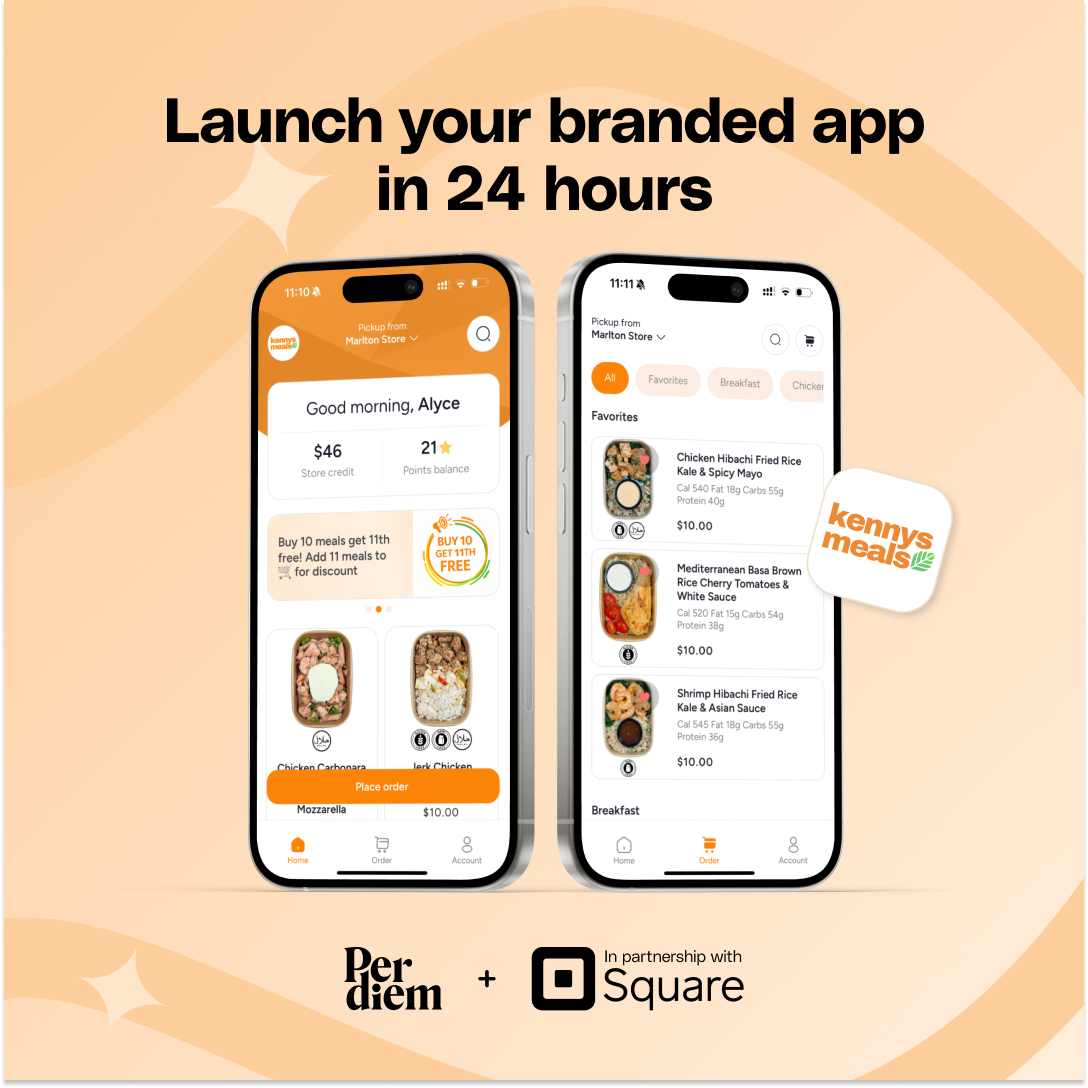
Restaurants that see strong repeat activity make this process feel natural. Past orders are easy to find. Favorite items are visible without searching. The app feels like it remembers the customer, not the other way around.
Why Familiarity Drives Repeat Orders
Customers do not return to explore every time. They return because they trust a specific item or combination. When that choice is easy to access, ordering becomes quick and predictable. This reduces hesitation and speeds up decision-making.
In contrast, apps that treat every visit like a first visit create friction. Customers have to scroll, search, and rebuild their order from scratch. That extra effort may seem small, but it breaks the flow. Over time, it reduces the chances of coming back.
What High-Performing Ordering Apps Do Differently
- Show past orders clearly
- Allow one tap reordering
- Highlight frequently ordered items
- Keep menus easy to scan
These small details create a sense of continuity. The app feels familiar, and that familiarity builds habit.
Checkout Speed Has a Direct Impact on Repeat Behavior
A customer has decided what to order. At this point, the only job of the app is to complete the purchase quickly. Any delay here can change the outcome.
Fast checkout creates a smooth experience. Slow checkout creates doubt. This is where many repeat orders are lost without being noticed.
The Link Between Speed and Retention
When checkout is simple, customers are more likely to return because they remember how easy it felt. A short process reduces effort and builds confidence. Over time, this becomes part of the reason they choose that restaurant again.
The impact of friction at this stage is larger than it seems. The global average cart abandonment rate is 70.19%, which shows how sensitive customers are to delays, extra steps, or confusion during checkout. Even small points of friction can lead to a drop off.
Where Most Apps Fall Short
Many restaurant apps still rely on long checkout flows. Customers may need to enter payment details again, confirm multiple steps, or deal with slow loading screens. Each extra step adds friction.
This does not always stop the first order, but it affects future behavior. Customers remember inconvenience even if they do not think about it directly.
What Improves Checkout Experience
- Saved payment methods such as Apple Pay or Google Pay
- Minimal steps between cart and confirmation
- Clear order summary with no confusion
- Fast loading screens
When checkout feels effortless, customers are more likely to return without thinking twice. Speed removes barriers and turns intent into action.
Push Notification Timing Shapes How Customers Engage
Push notifications can bring customers back, but only when they feel relevant. Sending more messages does not guarantee better results. Timing and context matter far more.
Customers respond when a message fits into their routine. A well-timed notification can act as a reminder at the right moment. A poorly timed one feels like noise.
Why Timing Matters More Than Volume
Restaurants that rely on frequent notifications often see lower engagement over time. Customers start ignoring messages that do not feel useful. On the other hand, well-timed communication creates value.
For example, a reminder before lunch hours or an update during a known busy period can match customer behavior. This makes the message feel helpful rather than promotional.
Studies show that push notifications can achieve 88% engagement rates when used correctly, but only when they align with customer intent and timing.
How Top Restaurants Approach Push Notifications
- Send messages during peak ordering times
- Use clear and simple language
- Focus on relevance instead of frequency
- Avoid repeating the same type of message
The goal is to stay useful without overwhelming the customer. When notifications feel timely, they support repeat behavior instead of interrupting it.
Learn more about the best times and strategies for push notifications in this detailed guide.
Rewards Work Only When They Are Part of the Ordering Flow
Many restaurants add loyalty programs and expect repeat orders to follow. In practice, rewards alone rarely change behavior. Customers return when the benefit feels immediate and easy to use, not when it sits hidden in a separate section.
Why Traditional Loyalty Programs Fall Short
Points that take too long to earn or rewards that require extra steps lose attention quickly. Customers may sign up, but they do not stay engaged. If the reward is not visible during the order, it does not influence the decision to come back.
This creates a gap between offering a program and actually driving repeat visits. The intent is there, but the experience does not support it.
What Makes Rewards Effective
High-performing restaurants connect rewards directly to the ordering journey. Customers can see progress while placing an order. Redemption feels simple and does not interrupt the flow.
According to industry insights, repeat visits can increase by over 30 percent when ordering and rewards work together in a single experience. This happens because customers understand the value instantly.
Practical Ways to Improve Reward Usage
- Show reward progress on the main screen
- Apply benefits automatically at checkout
- Keep redemption steps clear and quick
- Use simple offers that are easy to understand
When rewards feel immediate, they encourage customers to return without needing extra reminders.
Read the Formosa Coffee case study to see how a strong loyalty setup improves customer experience and drives revenue.
Consistency Builds Habit Over Time
One strong experience can lead to a second order. Consistency is what leads to long-term behavior. Customers return to restaurants that feel reliable every time they open the app.
How Consistency Influences Behavior
A predictable experience reduces uncertainty. Customers know what to expect, from menu layout to checkout speed. This familiarity creates comfort, and comfort leads to routine.
Restaurants that change too often or introduce friction in different parts of the journey struggle to build this pattern. Even small inconsistencies can affect trust over time.
What Consistent Apps Get Right
- Reliable ordering times and updates
- Uniform design across screens
- Smooth performance during busy hours
Consistency is not about keeping things static. It is about maintaining a dependable experience that customers can rely on without thinking.
Repeat Orders Are Built Through Experience
Repeat behavior does not happen randomly. It is shaped by how easy, fast, and familiar the ordering process feels. Restaurants that see steady repeat activity are not relying on a single feature. They focus on creating a complete experience that removes effort and supports routine.
Familiar ordering, quick checkout, relevant communication, and integrated rewards all play a role. Each part supports the next, creating a system that encourages customers to return naturally.
Over time, these small improvements lead to stronger customer relationships and more consistent revenue. The difference between one time users and regular customers often comes down to how well the experience supports their habits.
See How Top Restaurants Build Repeat Ordering
If repeat orders are a priority, the next step is to look at how these patterns come together in practice. Restaurants that focus on experience design tend to see better engagement, higher order frequency, and stronger customer retention.
Sign up to explore how a structured ordering system can support these behaviors and help turn first-time users into regular customers.