






















Artificial intelligence
What Chipotle Reveals About the Restaurant Growth Stack for 2026
Feb 20, 2026
TLDR
Major restaurant brands are doubling down on loyalty and artificial intelligence as core growth drivers. Chipotle is expanding AI-driven campaigns that bring inactive customers back, Starbucks continues refining personalized app experiences, and McDonald’s is strengthening its loyalty ecosystem to increase visit frequency. These moves point to a wider industry shift where retention, personalization, and owned digital engagement are becoming essential for sustained growth. As chains reinforce these capabilities, the conversation is expanding toward how independent restaurants can adopt similar tools to build stronger customer relationships and compete on engagement rather than scale.
Image Source: The Global and Mail
The Loyalty Arms Race Is Expanding Across Restaurant Brands
Competition among restaurants is increasingly centered on engagement rather than discovery. Customers already know where to eat. The challenge lies in staying relevant after the first visit and encouraging consistent return behavior.
Large chains are expanding personalization through data-driven campaigns that deliver timely offers based on guest habits. This level of targeting improves campaign effectiveness and creates a sense of familiarity, strengthening brand connection.
Loyalty programs are also growing in strategic importance. What began as simple point systems now serve as data engines that capture behavioral signals such as visit timing, item preferences, and purchase frequency. These insights allow restaurants to design campaigns that reflect real customer behavior rather than relying on broad promotions.
Marketplace platforms continue to play a role in acquisition, yet rising commission costs and limited data access make them less suitable for long term relationship building. Restaurants are therefore investing in owned digital channels that allow direct communication and deeper customer understanding.
As acquisition costs increase across channels, retention is becoming a central focus. Encouraging existing guests to return regularly provides a more stable revenue stream and reduces marketing spend. This context explains why Chipotle’s recent AI initiatives have attracted industry attention.
What Chipotle’s AI Expansion Reveals About Retention Strategy
Chipotle’s recent initiatives demonstrate how artificial intelligence can enhance loyalty systems by transforming them into proactive engagement tools.
Reactivating Inactive Customers Through Data Signals
The AI model analyzes ordering history and behavioral patterns to identify customers whose visit frequency has declined. Once detected, targeted incentives and messaging encourage these guests to return, helping restore routine engagement.
Predictive Targeting Based on Customer Value
Chipotle segments customers using predicted lifetime value and visit probability. This approach allows the brand to allocate promotions strategically and improve campaign efficiency instead of relying on uniform discounts.
Behavior Driven Rewards and Personalization
Rewards are tailored according to ordering habits. Customers who frequently purchase specific items may receive incentives linked to those preferences, increasing relevance and response rates.
Segmentation Powered by Ordering Patterns
Artificial intelligence enables deeper segmentation using variables such as purchase timing, basket size, and menu choices. These insights support precise communication and strengthen retention outcomes.
The broader lesson from Chipotle’s strategy is clear. AI alone does not create a competitive advantage. The real strength comes from owning customer data and activating it through automated retention journeys.
Starbucks and McDonald’s Strengthen the Pattern
Chipotle’s approach reflects a wider movement across major restaurant brands that are expanding investments in loyalty ecosystems and AI-driven engagement.
Starbucks and Experience Driven Personalization
Starbucks integrates artificial intelligence into ordering and recommendations within its mobile app. Personalized suggestions based on purchase history and timing create a smoother ordering experience and encourage repeat visits. Loyalty participation remains central to this ecosystem, supporting consistent engagement.
McDonald’s and Loyalty Ecosystem Expansion
McDonald’s continues to grow its global loyalty program while strengthening mobile ordering infrastructure. Data insights guide promotional strategies and help maintain direct relationships with guests across markets.
Across these brands, a common pattern emerges. Leading restaurants are building integrated digital ecosystems that combine ordering, loyalty, and customer analytics. This integration enables direct communication, targeted campaigns, and stronger retention without relying heavily on external platforms.
From Acquisition Focus to Retention Infrastructure
Restaurant marketing historically emphasized customer acquisition through promotions and discounts. Growth strategies are now expanding toward retention infrastructure that supports long term engagement.
Retention Economics and Revenue Stability
Returning guests typically generate higher lifetime value and require lower marketing investment. Encouraging repeat visits creates predictable demand and improves operational planning.
Visit Frequency as a Core Growth Lever
Consistent visits drive revenue stability and strengthen brand loyalty. Personalized campaigns and loyalty incentives help establish routine engagement patterns.
Loyalty as a Data Foundation
Modern loyalty systems capture valuable insights related to preferences, visit timing, and purchasing behavior. These insights inform marketing decisions and menu strategy.
Owned Ordering as Margin and Relationship Protection
Direct ordering channels allow restaurants to retain customer data and maintain control over the guest experience. Reduced reliance on commission-based third-party platforms supports profitability and strengthens long-term relationships.
Together, these elements form what can be described as the modern restaurant growth stack. This stack includes owned ordering platforms, loyalty engines, customer data systems, artificial intelligence automation, and retention marketing capabilities that operate as an integrated framework for sustainable growth.
Learn the 10 essential AI-driven metrics that help restaurant owners optimize growth.
The Independent Restaurant Gap
While large chains continue expanding retention infrastructure, many independent restaurants operate with fragmented systems that limit their ability to apply similar strategies.
Disconnected Technology Environments
Independent operators mostly rely on separate tools for ordering, loyalty, marketing, and analytics. These disconnected systems make it difficult to create unified customer profiles or execute coordinated campaigns.
Dependence on Marketplace Demand
Marketplace platforms support visibility and discovery, yet they restrict access to valuable customer insights. Restaurants may receive order volume but lack the data required to build long-term relationships and personalized engagement strategies.
Limited Personalization Capabilities
Without consolidated data, personalization efforts remain basic. Generic promotions and broad messaging reduce campaign effectiveness and fail to address individual customer preferences.
Absence of Automated Retention Journeys
Many independent restaurants rely on manual marketing efforts that are difficult to scale. This limits their ability to identify inactive customers, trigger lifecycle campaigns, or maintain consistent engagement after first visits.
Customer Data Silos
Customer information often remains trapped within individual platforms, preventing restaurants from developing comprehensive behavioral insights. This fragmentation weakens strategic decision-making and retention planning.
The gap between chains and independent operators is therefore not operational but infrastructural. The challenge lies in accessing integrated tools that enable data-driven retention without requiring enterprise-level complexity.
Democratization of Enterprise Growth Tools
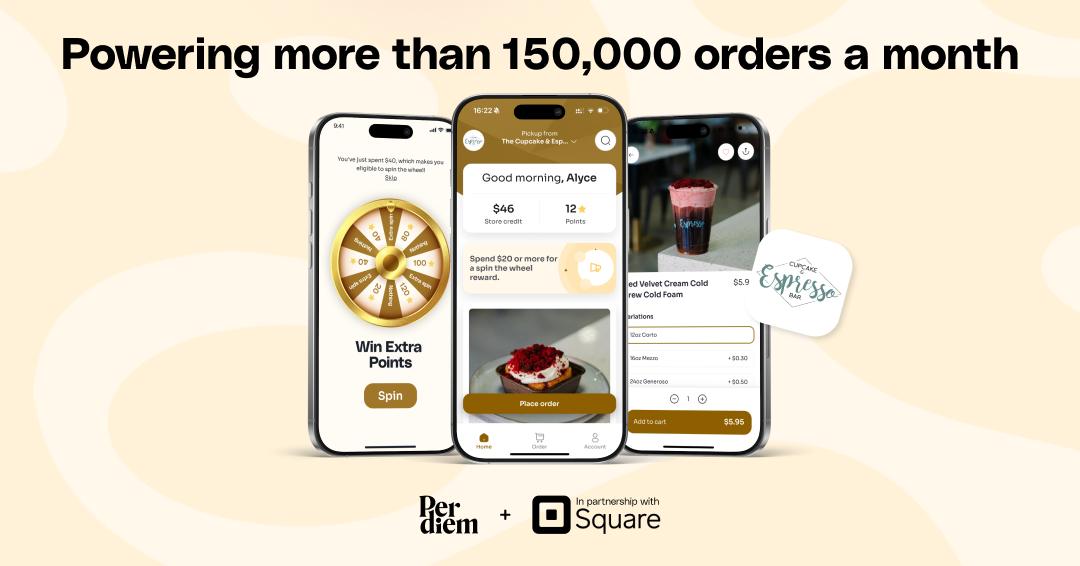
As major chains expand loyalty and AI-driven retention strategies, independent restaurants need infrastructure that supports similar engagement without operational complexity. Per Diem bridges this gap by combining loyalty, artificial intelligence, and owned ordering into a unified platform built for relationship-driven growth.
Chain Level Loyalty Across App and Web Ordering
Per Diem enables restaurants to launch loyalty programs integrated within mobile apps and web ordering, helping drive repeat visits and targeted engagement. Upcoming tiered loyalty will allow the businesses to recognize high-value customers through exclusive rewards, similar to leading chain models. The platform is also rated as a top loyalty app within the Square ecosystem.
AI-Powered CRM Through Olivia
Per Diem’s AI assistant, Olivia, acts as a personal CRM that analyzes customer behavior and automates engagement. Restaurants can identify inactive guests, segment audiences based on ordering patterns, and deliver personalized campaigns without manual effort, enabling consistent retention workflows.
Owned Ordering as the Foundation of Data Ownership
Last but not least, the platform supports first-party ordering through a branded app and web platform that connects seamlessly with Square loyalty and the AI marketing tool. This allows restaurants to capture first-party customer data, maintain direct relationships, and reduce reliance on marketplace-driven demand while strengthening long term engagement.
Final Thoughts
Chipotle’s AI expansion reflects a broader industry shift toward retention-driven growth built on loyalty, customer data, and direct digital engagement. Its competitors reinforce this direction through integrated ecosystems that prioritize repeat behavior over short-term acquisition. Independent restaurants now have access to similar infrastructure through platforms that unify loyalty, artificial intelligence, and owned ordering at a much lower cost.
The competitive battleground is shifting toward customer relationship ownership. Restaurants that capture and activate guest insights can strengthen loyalty, increase visit frequency, and rely less on commission-driven channels. As retention infrastructure becomes easier to adopt, success will depend on turning transactions into lasting relationships.
Book a demo with an expert to explore how your restaurant can build this foundation and drive repeat growth.