





















Automation
Why Customer Insights Matter More Than Discounts for Restaurants
Jul 16, 2026
TLDR
In today’s crowded dining landscape, getting customers through the door is only half the battle. The real challenge is turning those first visits into habits. Yet many restaurants still rely on blanket promotions, sending the same offer to every customer regardless of how often they visit or how much they spend. Your customers already show you what you need to know through their behavior. A loyal regular, a first-time guest, and a lapsed customer each signal different needs, yet they are mostly treated the same. Restaurants that grow consistently pay attention to these signals. Instead of guessing what to send, they focus on what their customers need.
Every Customer Deserves a Different Conversation
Imagine two customers.
The first orders a large latte every weekday before work. The second visited once after seeing your restaurant on Instagram three months ago and hasn't returned since.
If both receive a "20% Off This Weekend" message, one of those discounts was probably unnecessary, while the other may arrive far too late.
This is one of the biggest reasons restaurant marketing often feels ineffective. Restaurants usually create campaigns around promotions instead of customers.
Not every guest has the same relationship with your business. Some are becoming loyal regulars. Some are still deciding if they'll return. Others have slowly disappeared without anyone noticing. Treating every customer the same ignores those differences.
The result is predictable. Loyal guests receive discounts they would never have needed. New customers are given no real reason to make a second visit. Guests who are drifting away go unnoticed until they have already built new habits somewhere else.
Successful restaurants look at customer behavior before planning a campaign. They ask questions like:
- Who has not visited recently?
- Who is visiting more often than before?
- Who spends the most over time?
- Who has stopped ordering their usual items?
Those answers create much better marketing decisions than simply choosing the next discount.
This approach also creates a better experience for customers. People want to feel recognised, not treated as another name on a mailing list. Recent research from Toast found that only 20% of restaurant guests consistently receive a personalised experience, while tailored loyalty rewards and personalised discounts are among the things diners value most.
Restaurants have always built loyalty through personal relationships. Technology simply makes it possible to extend that same level of attention across every customer instead of only the regulars your staff remember by name.
The Three Customer Signals Every Restaurant Should Track
Restaurant owners have access to plenty of numbers. Daily sales, average order value, labour costs, food costs, and online reviews all help measure business performance.
Customer behaviour tells a different story.
Three simple signals can reveal which customers are growing closer to your restaurant and which ones are quietly slipping away.
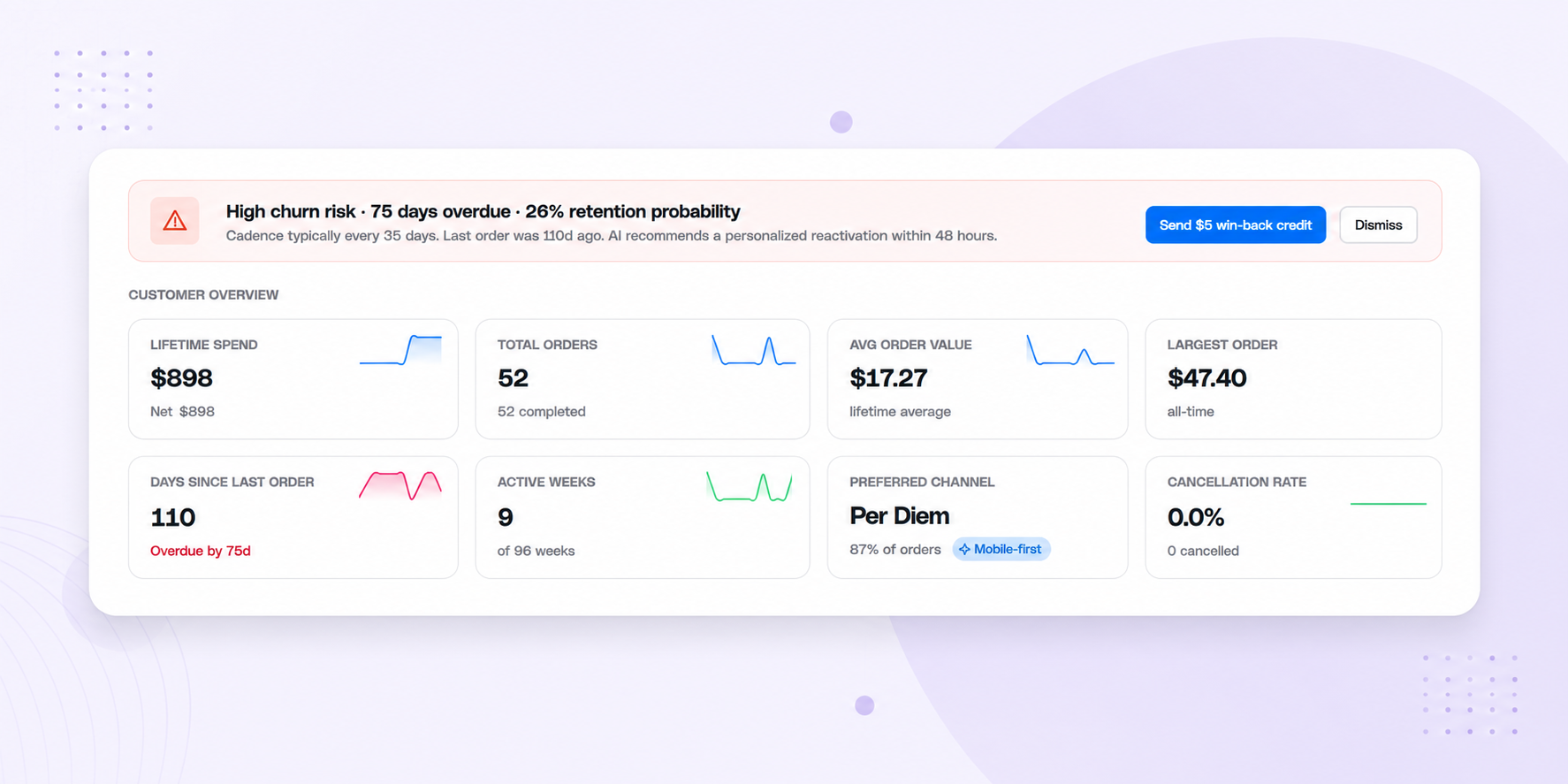
Recency
Recency answers one simple question.
How recently did this customer visit?
A customer who ordered yesterday is in a very different position from someone whose last order was six weeks ago.
Many restaurants only notice inactive customers after months have passed. By then, winning them back often becomes much harder.
Looking at recency helps you spot changes early. If someone who normally visits every Friday suddenly disappears for three weeks, that change deserves attention long before they become a lost customer.
Frequency
Frequency shows how often customers return.
A customer who visits every Monday morning has already started building a habit around your restaurant. Another customer may visit only once every few months.
Those two guests should never receive the same marketing.
Customers who visit regularly may appreciate early access to a seasonal menu, bonus loyalty points, or an invitation to try something new. First time guests often need encouragement to make that important second visit because that is where lasting habits begin.
Frequency also helps restaurants recognise positive trends. A customer who visited twice last month after ordering only once every few months could be on their way to becoming a regular.
Those opportunities are easy to miss if you're only looking at total sales.
Spend
High-spending customers are valuable, but total spend alone doesn't tell the whole story.
Imagine one customer spends $120 during a single family dinner every few months.
Another spends $18 on coffee and breakfast three mornings every week.
Both contribute to your business in different ways.
Looking at spending alongside visit patterns creates a much clearer picture of customer value. It also helps identify meaningful changes. A regular customer whose average order suddenly drops may be changing their buying habits before they stop visiting altogether.
When restaurants combine recency, frequency, and spending together, customer behaviour becomes much easier to understand.
Instead of looking at hundreds or thousands of names, owners begin to recognise patterns. They can see which guests are becoming loyal, which relationships need attention, and where future growth is most likely to come from.
Ready to personalize your restaurant marketing? Sign up with Per Diem today.
Turn Customer Insights Into Better Restaurant Marketing
Knowing how your customers behave is valuable, but real results come from acting on those insights. Customer data should help restaurants make better decisions, not sit inside reports that nobody looks at.
Match Your Marketing to the Right Customer
A good starting point is to think about your customers as groups with different needs instead of one large audience.
A customer who ordered for the first time last week is still deciding if your restaurant deserves a place in their routine. A simple follow-up offer, bonus loyalty points, or a reminder about your ordering app can encourage that second visit. That second order is often the beginning of a long term relationship.
Regular customers need a different approach. They already know your food and enjoy coming back. Instead of another discount, they may respond better to something that makes them feel appreciated, like early access to a seasonal menu, exclusive rewards, or a surprise treat after several visits.
Customers who haven't visited for a while deserve attention before they disappear completely. Waiting until someone has been inactive for months often means another restaurant has already become part of their routine. A timely offer while they're still familiar with your brand has a much better chance of bringing them back.
High value customers should also stand out. These are the people who visit often, spend consistently, and contribute a significant share of your repeat revenue. Recognising them with exclusive experiences or personalised rewards helps strengthen a relationship that already exists.
Better Questions Lead to Better Marketing
Customer insights help restaurants replace assumptions with informed decisions.
Instead of asking,
"What promotion should we send this week?"
Restaurants can ask:
- Which customers haven't visited recently?
- Who deserves a thank you for their loyalty?
- Which first time guests should receive a second visit incentive?
- Which regulars are beginning to visit less often?
These questions lead to smarter campaigns because they focus on customer behaviour instead of sending the same message to everyone.
The goal is not to send more promotions. It is to send the right promotion to the right customer at the right time.
Why Leading Restaurant Brands Focus on Customer Insights
Customer Relationships Drive Long Term Growth
The world's leading restaurant brands don't build loyalty by sending the same promotion to every customer. They use customer behavior to create relevant experiences that encourage people to return.
Starbucks is a great example. Its rewards program looks at factors like purchase history, visit frequency, and customer preferences to deliver personalized offers through its app. Someone who visits every morning is likely to receive different rewards than someone who hasn't ordered in weeks. McDonald's, Sweetgreen, and other major brands follow a similar approach, using customer insights to reward loyal guests, re-engage inactive customers, and strengthen long-term relationships.
The common strategy isn't bigger discounts. It's understanding what each customer needs at different stages of their journey.
Independent Restaurants Can Do the Same
This level of personalization was once limited to large restaurant chains with dedicated marketing teams and expensive CRM platforms. Today, modern restaurant technology makes customer insights accessible to businesses of every size.
Instead of manually sorting customer lists or relying on guesswork, restaurants can quickly understand who their best customers are, who is becoming less active, and who may need a reason to return. These insights make it easier to create relevant marketing, improve retention, and build stronger customer relationships over time.
The restaurants that continue to grow will be those that treat customer data as a tool for building relationships instead of simply measuring sales.
Final Thoughts
Customer insights help restaurants replace guesswork with smarter decisions. When you understand who your customers are, how their habits are changing, and who needs your attention next, you can create more meaningful marketing, improve customer retention, and build sustainable growth without relying on constant discounts.
Ready to turn customer insights into repeat business? See how Per Diem's CRM helps you understand your customers and drive more repeat visits. Book a demo today.