





















Menu Engineering
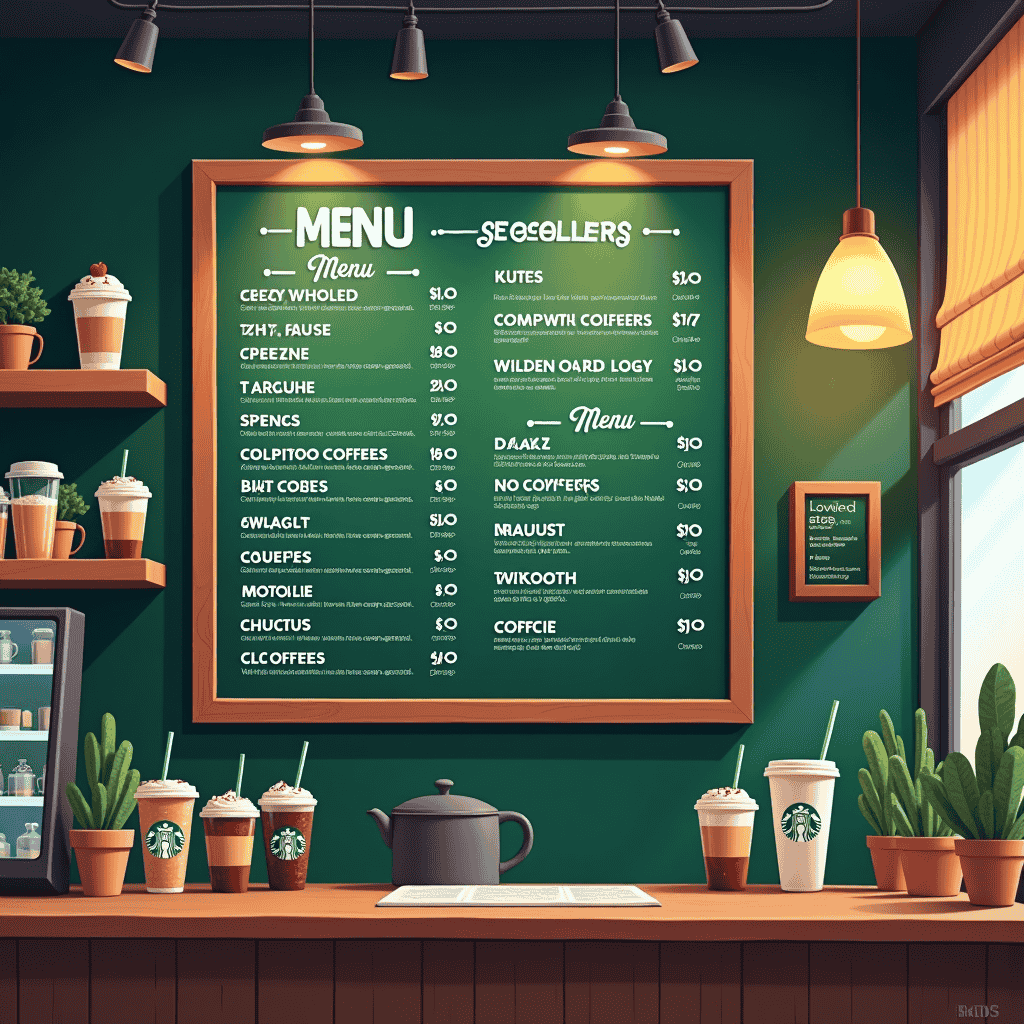
Starbucks Is Simplifying Its Menu. Here’s What Coffee Shops Can Learn
Apr 8, 2026
TLDR
Starbucks turned coffee into a personalized experience long before most cafés caught on. Custom milk, sweetness levels, and add-ons, every order could be adjusted. That became the standard that customers now expect everywhere. Which is exactly why its recent move stands out. A brand built on flexibility is now cutting back its menu. Not because personalization failed, but because the system behind it became too complex to scale.
What Starbucks is doing now is not removing personalization. It is reducing base complexity while keeping customization layers intact. That shift is what most coffee shops are missing.
Why Starbucks Is Simplifying Its Menu but Keeping Customization
Over time, Starbucks expanded its menu to a point where many items started overlapping. Different drinks used similar ingredients, slight variations created confusion, and some items barely sold. That kind of growth added complexity behind the counter without improving what customers actually order.
Now the focus is tighter. Instead of adding more, Starbucks is refining what already works. The menu is being reduced to a smaller set of core drinks that are easier to prepare, easier to understand, and easier to repeat.
Customization is still there, but it now sits on top of that simpler base. Customers can adjust milk, sweetness, and add-ons just like before. The difference is that those changes are applied to a cleaner, more controlled set of drinks.
This shift changes how the system is set up to work. With fewer base drinks, there are fewer decisions at the starting point. That can make ordering more straightforward for customers and easier to handle during busy hours.
It also gives staff a clearer structure to work with. Instead of managing many overlapping variations, they are working from a more defined set of drinks with customization layered on top.
For customers, a tighter menu can make it easier to spot what they already like or try something new without overthinking the options.
The Problem with Coffee Shop Menus: Unstructured Personalization
When flexibility turns into friction
Many coffee shops adopted customization because it worked for large chains. But most copied the idea without building the system behind it.
You see it in everyday orders.
A customer walks in and tries to order an iced latte. Then comes the back and forth. What milk. How sweet. Any flavor. Extra shot. Less ice. The menu does not guide them, so the barista has to. The order takes longer, the line builds up, and the final drink depends on how well that conversation went.
Now compare that to a more structured setup.
The same customer taps “Iced Vanilla Latte,” chooses oat milk from a short list, picks the sweetness level, and moves on. No back and forth. The drink is built the same way every time.
That difference is where most menus break.
When personalization is unstructured, everything is possible, but nothing is clear. Customers have to build the drink from scratch each time. Staff deal with unpredictable combinations. Orders slow down, and consistency becomes harder to maintain.
In that setup, customization starts working against the experience.
What structured personalization looks like
Structured personalization does not remove choice. It organizes it.
Instead of asking customers to figure everything out, the menu does part of the thinking. Drinks have a clear base. Modifiers are limited to what actually makes sense. Each option fits into a defined build.
This makes a real difference in how the system runs. Customers move faster because they recognize options instead of creating them. Staff follow a consistent process instead of interpreting every order differently. Repeat orders become easier because the structure stays the same.
What Customer Behavior Actually Looks Like in Coffee Shops
Customers are not exploring, they are repeating
Most menus are designed as if customers are exploring every option. In reality, that is rarely the case.
Coffee orders are driven by habit. People usually know what they want before they reach the counter. They are not comparing ten variations of the same drink. They are looking for a quick way to get their usual.
When menus present too many choices, that process slows down. Customers pause, scan, rethink, and sometimes even change their order. In busy hours, that hesitation adds up across the line.
Why too many choices slow everything down
Research on decision-making shows that more options can lead to slower decisions and lower satisfaction. In a café setting, this directly affects the speed of service and overall experience.
This is why simpler menus often perform better. They match how customers actually behave. Instead of forcing decisions, they support quick recognition.
In this context, personalization should not mean rebuilding a drink every time. It should make repeat orders faster and more natural.
From Endless Choice to Guided Menus That Actually Work
Why simpler menus help customers decide faster
Most menus are built to show everything a shop offers. But that is not how customers order.
People walk in with a rough idea of what they want. They are not looking to explore ten variations. They are looking to confirm a choice quickly and move on. When the menu presents too many paths, that process slows down.
This is where guided menus make a difference.
Instead of listing every possible combination, guided menus highlight a smaller set of drinks and let customers adjust from there. The starting point is clear. The choices that follow are limited and relevant.
You can see this in how top-performing menus are structured today. Bestsellers are placed upfront. Categories are tighter. Options are grouped in a way that feels natural, not overwhelming.
A simple change like this can reduce hesitation during ordering. Customers spend less time scanning and more time choosing. That adds up during peak hours when even a few seconds per order matter.
Promote your best sellers with item tags on app and web. Get Started.
What a Better Customization System Looks Like in Practice
Designing for speed, consistency, and repeat orders
Once the menu is simplified, the next step is how customization is handled. This is where most shops either create a smooth flow or introduce friction.
A better system focuses on a few key elements.
1. Start with drinks that hold up on their own
Each core item should be complete as it is. Customers should not feel like they have to modify it to make it work. When the base drink is strong, customization becomes an extra layer instead of a requirement.
This also reduces unnecessary changes. Fewer adjustments mean faster preparation and more consistent output.
2. Keep modifiers focused and relevant
Instead of offering every possible option, limit modifiers to what customers actually use.
Milk choices, sweetness levels, and a small set of add-ons are usually enough. When options are focused, customers make decisions faster, and staff can follow a clear process.
This is where structure matters. With Per Diem, modifiers are already organized and synced with Square, so the same logic applies across in-store and digital orders without extra setup.
3. Make repeat ordering effortless
Most customers are not trying something new every day. They are coming back for the same drink.
If they have to rebuild that order every time, the experience slows down.
Features like saved favorites and one-tap reordering solve this. A customer opens the app, taps their usual, and checks out in seconds. No need to go through the full menu again.
This is where personalization becomes useful. It remembers behavior instead of asking for it again.
4. Reduce decision points, not flexibility
The goal is to remove unnecessary steps, not remove options entirely.
For example, instead of asking multiple open-ended questions, present a short list of clear choices. That keeps the experience controlled without feeling restrictive.
Customers still feel in control, but they are not doing extra work to get there.
The Direction Coffee Shops Are Moving Toward
Menus are starting to look less like long lists and more like systems designed around behavior.
The focus is shifting toward faster ordering, clearer choices, and easier repeat visits. Shops that adapt to this tend to create smoother experiences both at the counter and on mobile.
Customization still plays a role, but it works best when it fits into a structured flow. When that structure is in place, everything else becomes easier to manage.
Final Thoughts
This shift is less about what is being removed and more about how ordering is being shaped. Customers still expect flexibility, but they also expect speed and clarity. When menus become easier to move through, everything else improves, from ordering to preparation to repeat visits.
Coffee shops that focus on structure instead of volume create a better flow across the entire experience.
If you want to make customization easier to handle without slowing things down, start with a system designed around it.
Book a demo and see how you can simplify your menu, organize your modifiers, and make repeat orders faster for your customers.