.svg)


TLDR
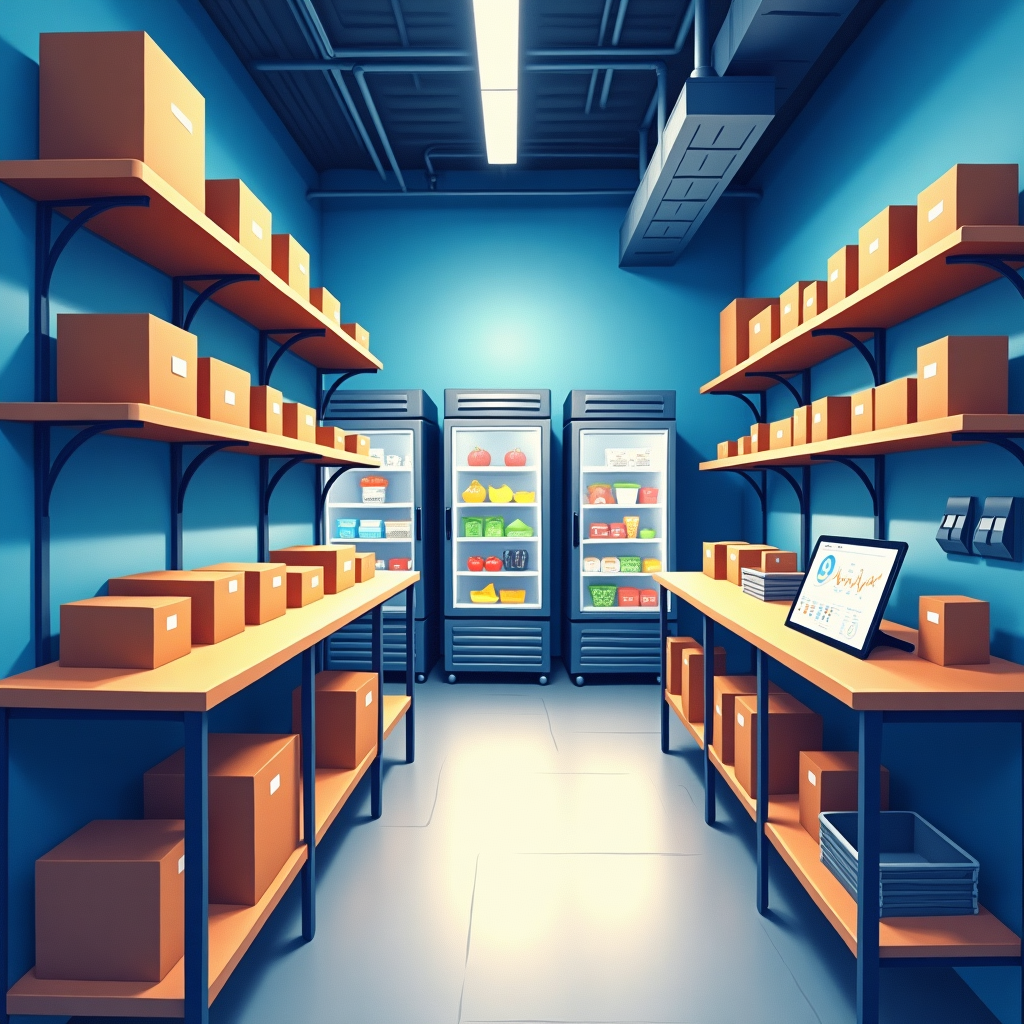
Standing in a freezer with a clipboard counting inventory is hardly anyone's idea of productive work. Yet for thousands of restaurant managers, it has been part of the weekly routine for years. It is slow, repetitive, and often leaves businesses making purchasing decisions with outdated information. After seeing that problem firsthand in his family's restaurants, Aakar Khanna decided there had to be a better way. Together with Arjun Chaliha, he built Truffle, an AI platform that is changing how restaurant groups manage their back-of-house operations.
From Family QSRs to Building One of Restaurant AI's Most Practical Platforms
Standing in a freezer with a clipboard counting inventory has been part of restaurant life for decades. Every operator knows the routine. It takes hours, pulls managers away from the floor, and still leaves room for mistakes. By the time the numbers are entered into a spreadsheet or POS system, they may already be outdated.
That challenge exists in restaurants across the industry, from independent cafes to multi-unit restaurant groups. It was also something Aakar saw growing up around his family's quick-service restaurants in Canada.
"Standing in a freezer with a clipboard trying to count inventory was one of the most dreaded parts of the job."
Inventory counting was only the beginning. Ordering products often depended on experience and a quick look at previous sales. While experienced operators develop strong instincts, purchasing decisions are influenced by many changing factors, including weather, promotions, local events, supplier lead times, and seasonal demand. Keeping track of all of that manually is difficult for even the best managers.
The result is familiar across the industry. Food gets wasted, popular ingredients run out unexpectedly, and managers spend valuable time dealing with paperwork instead of leading their teams.
Those experiences stayed with Aakar throughout his career. After covering the restaurant sector as an investment banker at Goldman Sachs and later helping scale an AI startup, he returned to the same question that had stayed with him for years: How could technology handle the repetitive work while giving operators better information before important decisions had to be made?
That question became the starting point for Truffle.
The Two Friends Behind Truffle
Turning that idea into reality required two different kinds of experience.
Aakar founded Truffle with Arjun, a close friend he met while studying computer science and finance at the University of Michigan. Nearly a decade after meeting as freshmen, they combined their backgrounds to build software designed specifically for restaurant operations.
While Aakar brought years of exposure to the operational side of restaurants, Arjun brought deep experience building large-scale AI systems. Before co-founding Truffle, he worked as a Senior Software Engineer at Bloomberg, leading artificial intelligence and machine learning initiatives for the Electronic Trading team. His work involved systems processing hundreds of millions of dollars in transaction volume every day.
Today, Arjun leads the engineering behind Truffle's computer vision, forecasting models, and AI agents, while Aakar works closely with restaurant groups to understand operational challenges and shape the product around them.
Truffle is backed by Y Combinator, the same firm that backed DoorDash, Instacart, and Airbnb early on.
That combination has helped Truffle stay focused on solving practical problems instead of building technology for the sake of technology.
How Truffle Turns Hours of Restaurant Work Into Minutes
Truffle describes itself as an AI operating system for the restaurant back of house. In simple terms, it automates many of the operational tasks that typically consume a manager's day.
Instead of asking operators to replace their existing processes overnight, the platform follows a clear three-step workflow.
Step 1: Inventory Counting Through Computer Vision
The first step removes one of the least popular jobs in any restaurant.
Rather than counting inventory manually with a clipboard, staff simply use the Truffle mobile app to capture photos or videos of their storage areas.
Computer vision models identify products and calculate inventory automatically, giving operators an updated inventory count in minutes instead of hours.
Because counting becomes so much faster, restaurants can check inventory far more frequently and make decisions using current information instead of outdated records.
Step 2: AI-Powered Demand Forecasting
Once inventory data is available, Truffle's machine learning models forecast demand for every item.
Instead of leaving managers to rely on instinct alone, the platform analyzes multiple factors together to estimate future demand with greater accuracy. That gives managers a stronger starting point before placing inventory orders or planning food preparation.
Step 3: AI Agents That Handle Daily Operational Tasks
The final layer brings those insights into everyday workflows.
Truffle's AI agents help prepare inventory orders, create food preparation plans, support staff scheduling, reconcile invoices, and assist with menu engineering.
Managers still review and approve important decisions, but much of the repetitive administrative work is completed before they even open the dashboard.
The result is simple.
Restaurant teams spend less time behind a desk and more time focusing on their staff, food quality, and guest experience.
Proving It in Real Restaurant Operations
Every restaurant technology company promises to save time. The real test is what happens after a team starts using it.
One example comes from a multi-unit franchisee of A&W Restaurants, where Truffle deployed its AI-powered inventory ordering workflow in just seven days.
Before using the platform, completing a full inventory count took hours. Since that process was so time-consuming, the team could only check part of the stock room a few times each week. Inventory orders between those counts were largely based on experience.
Today, a team member simply scans the stock room using the Truffle mobile app twice a day. Computer vision provides a real-time inventory count, while Truffle's forecasting models predict demand for every item over the next two weeks with 97% accuracy. An AI ordering agent then prepares an optimized purchase order for the manager to review and approve directly from the app.
The results have been significant. Inventory counts are completed about 90% faster, food waste has dropped by nearly 40%, and stockouts that previously happened several times a week have been almost eliminated.
According to Aakar, the operational savings quickly added up.
"Between the savings on food waste, stockouts, and the hours back for managers and staff, we've heard from our partners that the system paid for itself multiple times over in the first few months."
Instead of replacing restaurant teams, the platform helps them make faster decisions with better information, something that becomes increasingly valuable as operators manage multiple locations.
Keeping People at the Center of AI
Artificial intelligence has become one of the biggest topics in restaurant technology, but many operators still have the same question: How much should AI actually be responsible for?
For Aakar, the answer is straightforward. "Agents draft, managers approve."
That idea shapes how Truffle is built.
Before founding the company, Aakar worked on AI applications in healthcare, where trust and human oversight were just as important as accuracy. The same principle now guides Truffle's approach to restaurant operations.
Some tasks naturally fit AI. Counting inventory, forecasting demand, preparing purchase orders, reconciling invoices, and creating prep sheets all require processing large amounts of information quickly and consistently. These are repetitive jobs where software can reduce mistakes and save valuable time.
Other responsibilities still belong to people.
Coaching employees, supporting guests, maintaining food quality, and making judgment calls during a busy service require experience, leadership, and human connection. Those are areas where technology should support managers, not replace them.
As he puts it:
"The goal isn't to remove managers from the restaurant. It's to remove the back office from their day."
That philosophy explains why every recommendation Truffle generates is designed to help managers make better decisions, not make those decisions for them.
Designed for Busy Restaurant Teams
Even the best restaurant software only creates value if teams can start using it quickly.
Truffle aims to remove the lengthy setup process that often comes with new operational systems. New restaurant groups are typically live within two weeks, with core features available during the first week.
The platform connects directly with Square and other major POS systems, allowing restaurants to begin using existing sales data immediately. From there, AI helps organize inventory lists, recipes, and vendor information, even if those records exist in different formats. In many cases, Truffle can even generate an initial setup by pulling menu and recipe information directly from a restaurant's website.
Although the platform is built to be self-serve, the company still provides on-site onboarding and training for every customer. The goal is to make sure managers and shift leaders feel comfortable using the system from day one.
Once the first location is running, expanding to additional restaurants becomes much faster, with new sites typically going live within hours.
Final Thoughts
Truffle continues to expand across the United States and Canada, working with restaurants, cafes, and bars that want to simplify daily operations without adding extra complexity.
While inventory management remains one of its strongest capabilities, the company's focus continues to grow across labor planning, finance, and other back-of-house workflows. As AI becomes a larger part of restaurant technology, Truffle's approach remains refreshingly practical: solve everyday operational problems first and give managers the tools to make better decisions.
For restaurant groups looking to modernize the back of house, that focus could prove just as valuable as any new technology itself.
Learn more about Truffle at usetruffle.ai

.svg)
.svg)

.png)

.png)
.png)

.avif)

.avif)
.avif)






.avif)




.avif)