.svg)


TLDR
Launching a mobile ordering app sounds exciting at first. Then the questions start. Will customers actually use it. Will the setup be complicated. Will it reflect the brand properly. Independent restaurants do not just need an app. They need a simple tool that fits into their daily operations and feels natural for customers. After looking through feedback shared by restaurants that recently launched apps with Per Diem, a few priorities appear again and again.
If you are considering a mobile ordering app for your restaurant, here are three things to pay attention to.
• A simple ordering experience that customers can understand instantly
• A setup process that does not become a technical headache
• Customization that allows the app to reflect your brand
Let’s look at why each of these matters.
1. A Simple Ordering Experience Customers Will Use
When customers download a restaurant app, they are usually hungry and in a hurry. They want to open the app, find their usual order, and check out quickly. If the interface feels confusing, most people will go back to ordering in person or through another platform.
For independent restaurants, this matters even more because the goal is to build repeat habits. A clean, easy ordering flow helps customers return to the app regularly rather than forgetting about it after the first download.
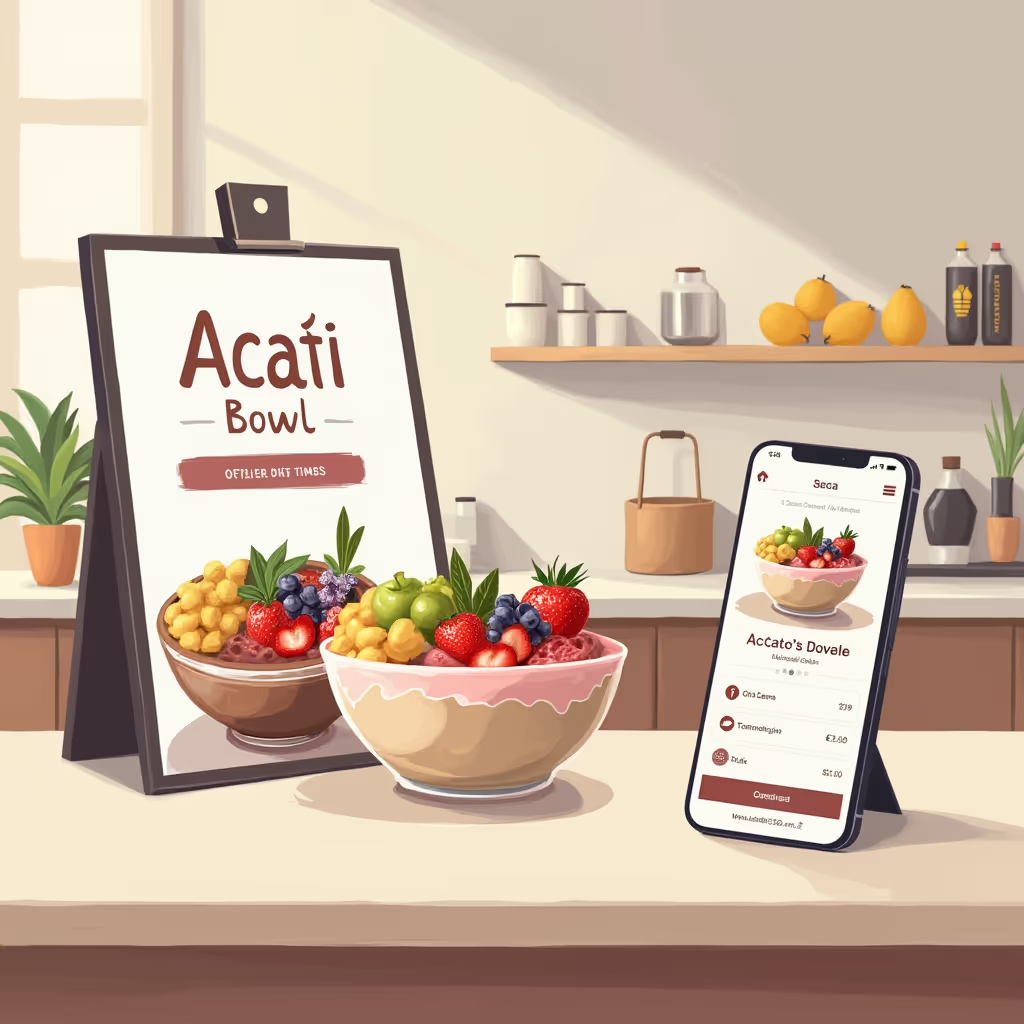
This became clear for Super Bowls, an acai and superfood bowl brand based in Toronto. The restaurant focuses on fresh bowls and smoothies, using healthy ingredients that customers often customize with various toppings and bases. When the team introduced their mobile ordering app, they wanted something that customers could navigate without thinking twice.
As they began onboarding guests to the app, the interface's simplicity stood out immediately.
“We just started using the Per Diem app and it’s been awesome so far! We’re slowly onboarding our customers and the UI is super intuitive and easy on the eyes. Tons of customization features too. Really appreciate the support as we get everything set up!”
For restaurants, this kind of experience makes a real difference. When the menu is clear and customization steps feel natural, customers complete orders faster and return.
Before choosing an ordering platform, you should try placing a full order yourself. Browse the menu. Add modifiers—complete checkout. If the process feels smooth in under a minute, customers will likely feel the same way.
2. A Setup Process That Does Not Become A Technical Headache
Launching an ordering app should not feel like starting a complicated tech project. Restaurants already manage staff schedules, inventory, suppliers, and daily service. The last thing owners need is a platform that turns onboarding into weeks of troubleshooting.
A good ordering system should guide restaurants through the setup step by step. Menus should be easy to upload, modifiers should be simple to configure, and support should be available when questions come up.
Yellowfish Sushi in San Antonio recently went through this process. The restaurant has built a strong local following for its creative “Japamex” concept, which combines traditional sushi with bold Mexican flavors. Guests visit for specialty rolls like the Portao Insanada, the Tulum roll, and the restaurant’s signature Yellowfish roll.
When the team decided to introduce their own branded mobile ordering app, they wanted a way for customers to order directly without relying only on third-party marketplaces. Getting the setup right was important because the menu includes many unique rolls and combinations.
After launching the app, the team shared their experience with the process.
“Per Diem has been a great partner for our restaurant. Their branded mobile app makes it easy for our customers to order directly from us, and the experience feels clean, fast, and professional. The setup process was smooth and their team was very responsive whenever we had questions. It’s a great solution for restaurants, bakeries, and coffee shops that want their own app instead of relying only on third-party platforms. Highly recommend.”
For restaurant owners evaluating ordering platforms, this part often gets overlooked. The features may look impressive on paper, but the real question is how easy the system is to launch and maintain.
3. Customization That Reflects Your Restaurant Brand
No two independent restaurants look the same. The menu, the atmosphere, and the way customers interact with the brand are all part of what makes a place memorable. A mobile ordering app should support that identity rather than forcing every restaurant into the same template.
For many owners, customization becomes an important factor when choosing an ordering platform. Menu structures, item modifiers, images, and even the visual layout should allow the restaurant’s personality to show through. A café might want a bright and clean layout that highlights seasonal drinks. A sandwich shop might want categories organized around quick lunch combinations. When the digital experience mirrors how the restaurant already operates, customers recognize the brand instantly.
This is something the team behind Roly Poly Rolled Sandwiches values strongly. The brand has grown into a well-known franchise with more than fifty locations across sixteen states. Many customers visit for the rolled sandwiches, fresh salads, and soups, which feature simple ingredients and balanced flavors. With locations spread across several regions, including Louisiana, Georgia, Florida, North Carolina, Indiana, and others, maintaining a consistent brand experience is important.
As Roly Poly expanded its online ordering options, they wanted a platform that could support its menu structure. Rolled sandwiches come with various fillings, sauces, and combinations, so customization within the ordering system needs to be organized and easy for customers to follow.
After working with the platform, the team shared their impression of the experience.
“A great app user friendly for customers with some great customisation.”
For a restaurant brand with many locations, flexibility inside the ordering system helps keep everything consistent. Each location can present the menu clearly while still maintaining the brand identity customers expect.
If you’re an owner evaluating ordering apps, take time to explore how much control the system offers. Look at how menu categories appear, how modifiers are displayed, and how the overall layout presents the restaurant. When the digital ordering experience reflects the brand properly, customers feel the same familiarity they experience when walking into the restaurant.
Final Thoughts
Independent restaurants spend years building a brand that customers recognize and trust. A mobile ordering app should support that relationship, not complicate it. When the app is easy to use, simple to launch, and flexible enough to reflect the restaurant’s menu and style, it quickly becomes part of the everyday ordering routine.
Many restaurant owners discover that the right platform helps customers order directly, return more often, and interact with the brand beyond the physical location. The key is choosing a system that keeps the experience straightforward for both customers and staff.
For restaurants thinking about launching their own app, the best next step is to see how it works in action.
Book a demo with an expert to explore how a branded mobile ordering app could work for your restaurant.

.svg)
.svg)

.png)

.png)
.png)

.avif)

.avif)
.avif)





.avif)




.avif)